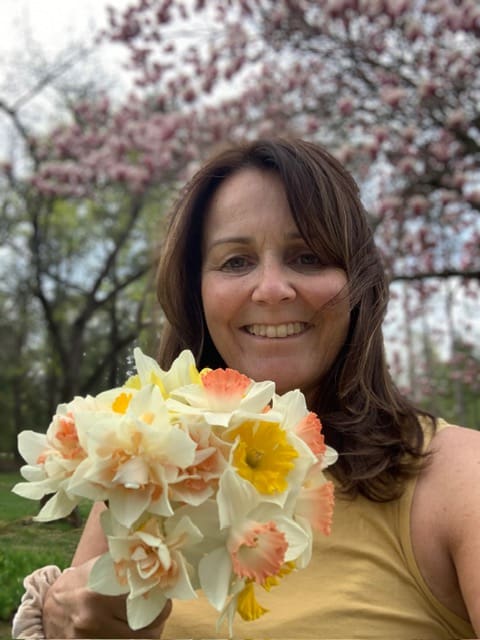
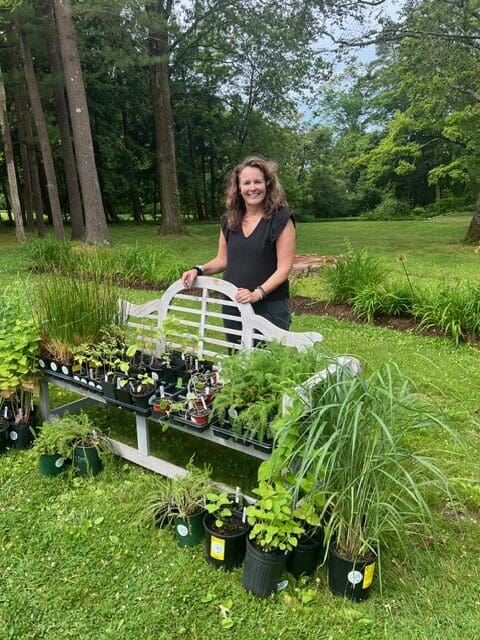
Our garden in Litchfield, CT, is beautiful. We live in town on a lovely street where people pass by every day. We know our neighbours, and we can get a cup of coffee or a good dinner with just a 10-minute stroll down the street. We are also fortunate to have an 8-acre garden edged with woodland that makes you feel like you are in the middle of our local woods when you walk out the back door onto the deck. We have lived in the house as weekenders for over 10 years while we continued to raise our kids in Brooklyn, NYC. At heart, I am a country girl, and Litchfield and its garden have sustained that part of my soul as we split our time between the manicness of NYC and the serenity of Litchfield Hills.
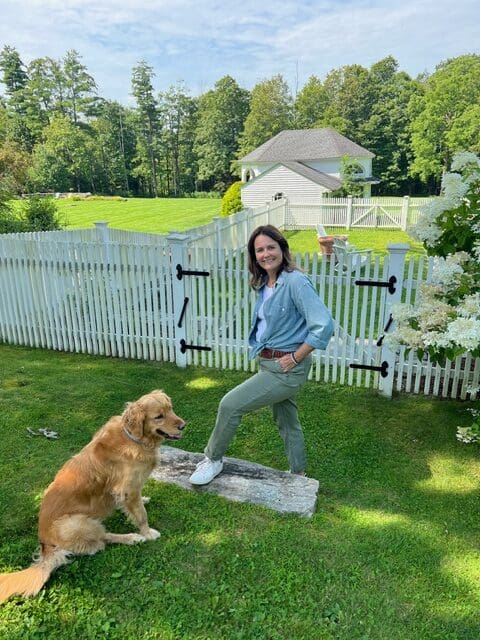
Because of the garden’s scale, we have worked on its design in small chunks. Over the past ten years we added a deck that comes off the kitchen with a vast area for entertaining and family dining and a lovely outlook down to the woodland; a pool with a beautiful sitting area surrounded by large blooming white hydrangea; reworked the perennial beds at the front of the house replacing evergreens with combinations of exotic and native perennials and shrubs; reclaimed the potting shed and the pavillion as the ‘White House’, storage for all gardening tools; and most recently created a new formal cutting garden full of perennials adjacent to the deck. Whilst we were growing into the house, I continued to study and work in garden design, and over time realized that what I really love about gardening is growing. That might sound odd to say, but I trained as a landscape designer, not a plant designer or grower, and these are all different, albeit complementary skill sets. In recent years, working as a nursery fellow, studying plant design and floristry, I have developed a passion for growing plants and producing cut flowers.
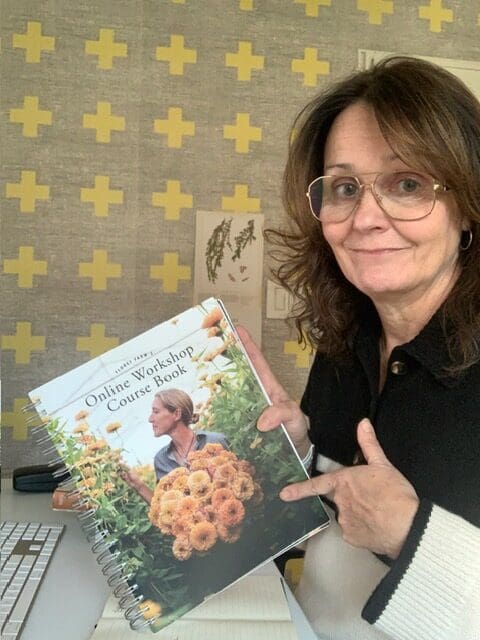
At the end of the summer of 2024, with the formal perennial cut flower garden in place, I became fascinated with flower farming. I came across the Floret Farm documentary series and watched it in full. Inspired by Erin, the founder of Floret, I researched more about the farm and its origins on the West Coast in Washington. Our newly created perennial cut flower garden works great as part of the design of the garden, but it is just one step in the development of a flower farm, and I knew I would need to consider adding growing space if I truly wanted to understand what growing flowers commercially involved.
So, where to start? Easy, I began by signing up for the Floret Farm Cut Flower Online Workshop, which has an amazing reputation. Erin is awesome. She meets students where they are, whatever their background, and pushes participants to answer meaningful questions to gain clarity about their personal motivation. The first few exercises of the workshop focus on the Why and the Vision, so I started asking myself questions.
Why did I want to grow cut flowers?
- To be/work outdoors.
- To expand my knowledge and experience of growing plants from seed
- Growing cut flowers aligns with the Your Garden Story mission: to help us all become gardeners and make this world greener!
- To to connect with my local community
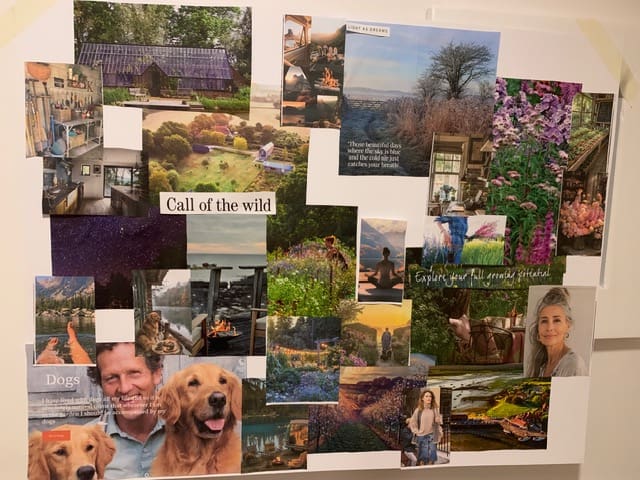
What is my vision?
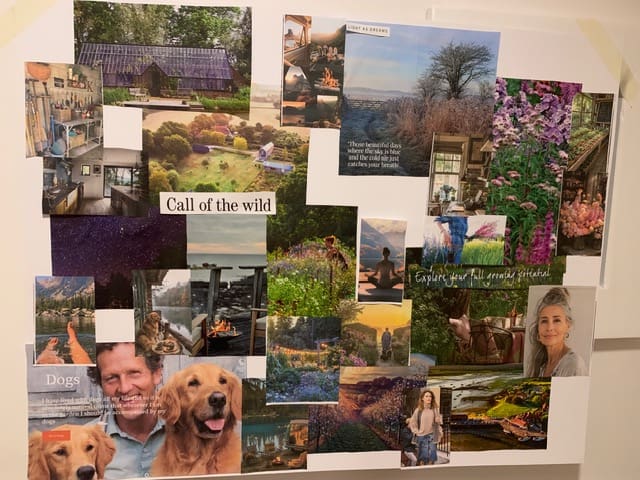
Erin asked us to create a vision mood board. What did we want our lives to look like? What images spoke to us? I shared the photos with friends and family, who commented that the vision board looked like my part-time life in CT, just without the ocean. The vision board itself is helpful as a compass to redirect when you lose your motivation/focus. Some days after too much time at my desk doing admin, it reminded me to get outside and get gardening.
Honestly, at this stage, I had no idea whether it would be feasible to start a cut-flower business, but it was essential to set short-term goals to stay focused. I scribbled on Post-its for a few days to really think through my goals. It’s easy to be big picture, but in reality, it’s best to focus on goals that you can measure.
My 2025 goals were:
- To test and document growing seasonal cut flowers
- To share my experience of growing cut flowers with others via social media, blogs, and word of mouth
- To host a plant and cut flower pop-up and/or farm stand
- To integrate flower growing into other Your Garden Story projects
So once I had clarity of vision and some short-term goals, how did I go about it? Using Floret Farms’ practical workshop framework, I took it step by step.
Step 1: What resources do you need? The serious bit!
If you are thinking about growing cut flowers beyond a cutting garden, the first three questions are key:
- How much space do you have? And how are you going to optimize it?
- How much money do you have to invest in year 1?
- How much time do you have?
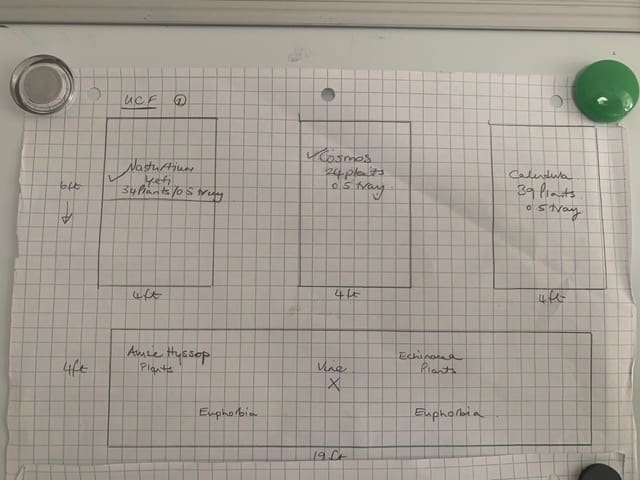
In my case, I had SO much space, but I only have limited time. We have family in the UK, and our kids are scattered across the US, so we do a lot of travelling. This year, we also had two family weddings in the UK during the peak growing season! We also still live between Litchfield and Brooklyn.
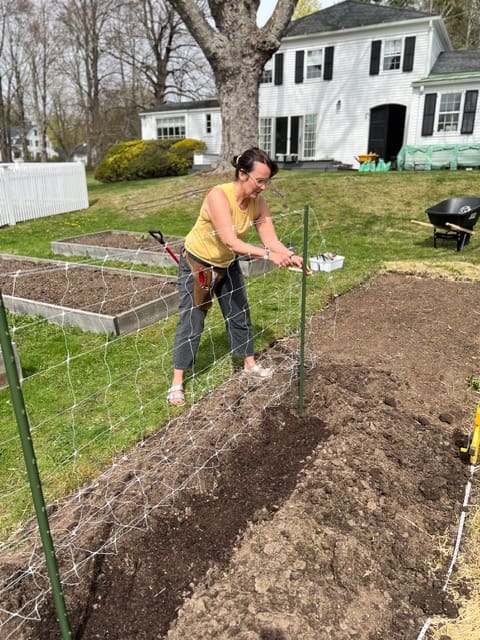
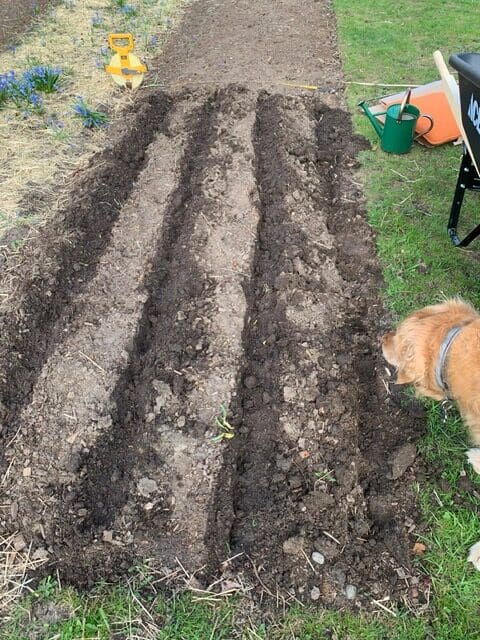
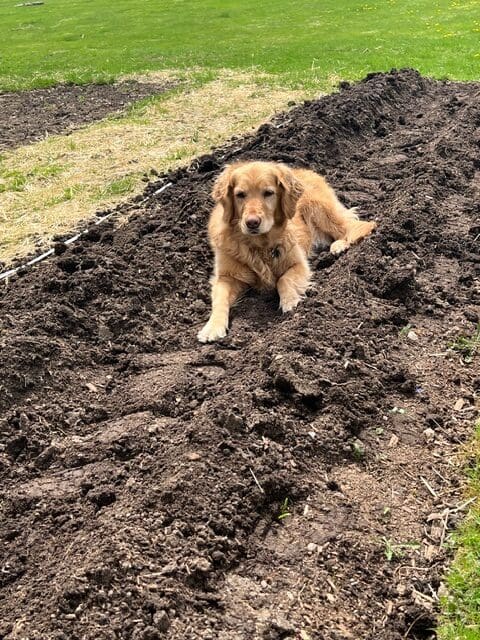
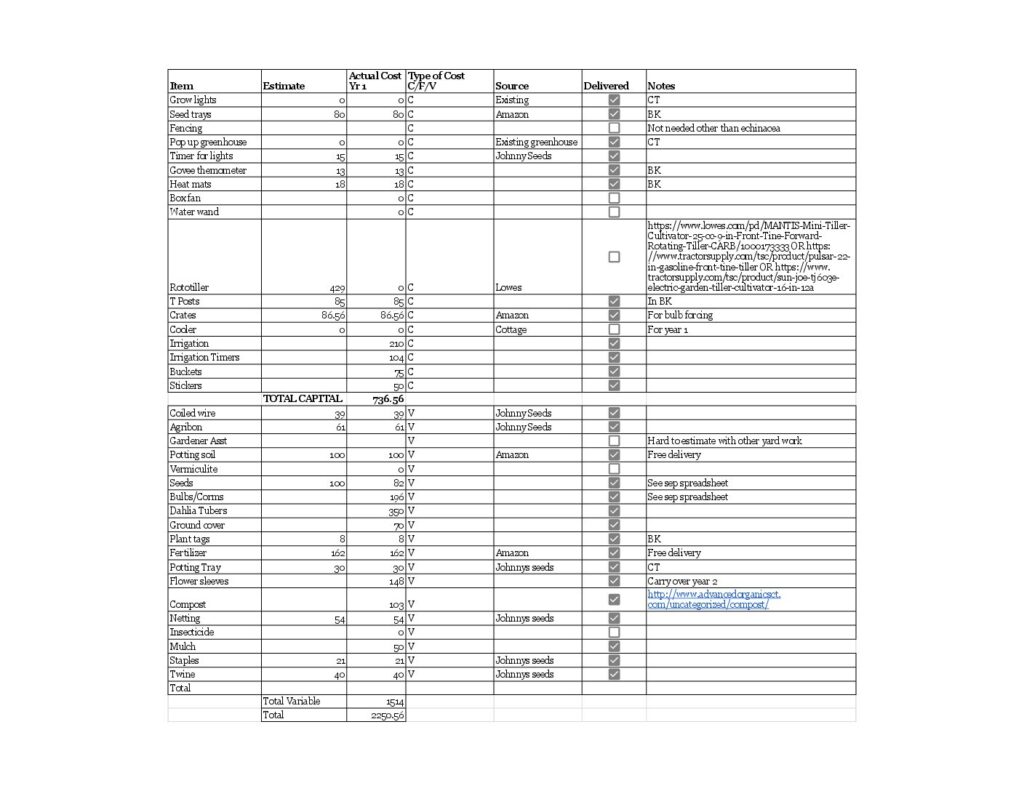
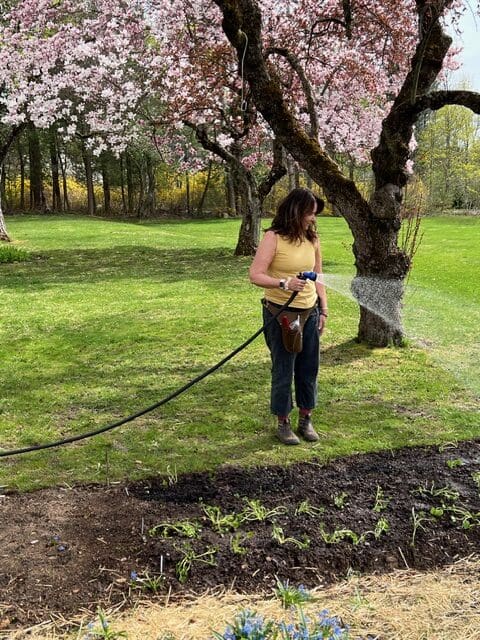
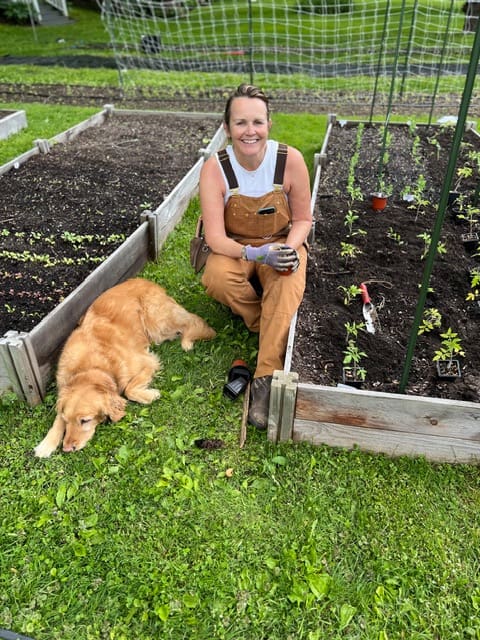
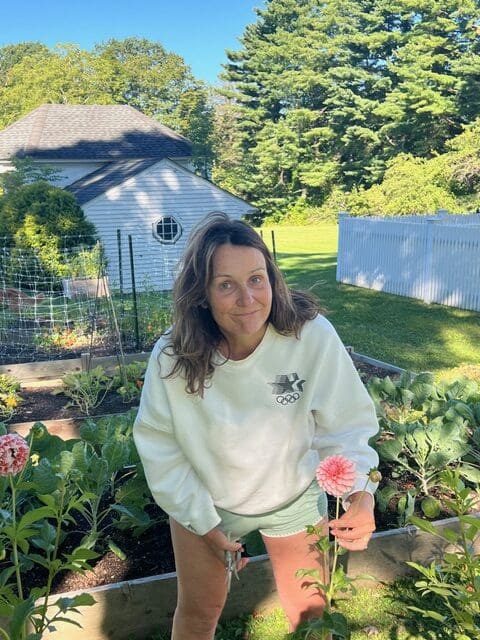
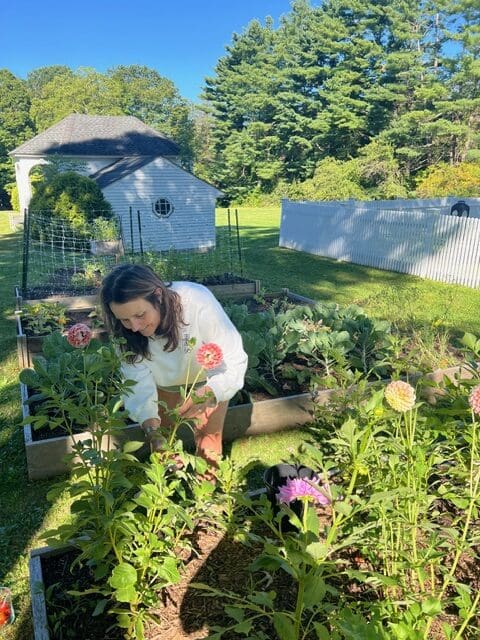
So I decided to start small. I added flower beds to my existing vegetable plot, allocated them to flowers, and decided to maximise cutting flowers from elsewhere in the garden. Full sun exposure is essential, ideally with a north-to-south orientation. Having it somewhere not too far from a potting shed or work station was key, as was access to water. Creating width between the beds is also essential for easy access. Once I decided on the space, I worked out my budget by drawing up a list of items I would need for growing. Whilst it was tempting to rush out and buy a gator, starting small meant I could mostly use my existing tools and spend money on seeds, plants, irrigation and growing frames.
Step 2: What flowers will you grow? The fun part!
After you have set goals, worked out how much space you have and how much time and money you can invest in Year 1, the fun part begins. What do you want to grow?
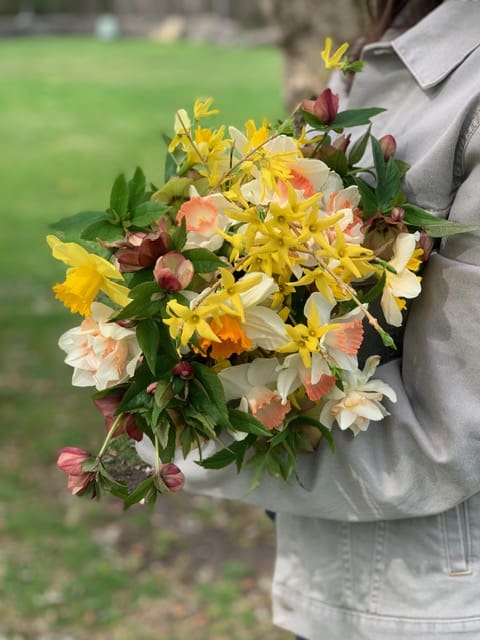
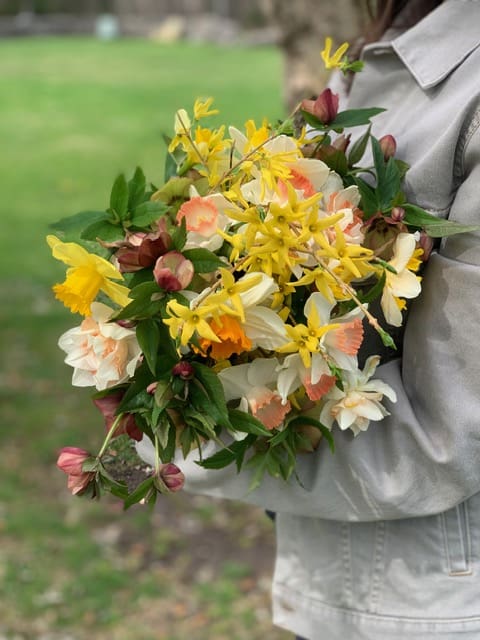
Before you race off and buy seeds and plants, it is essential to think seasonally about what you grow. In an ideal world, you want to be able to cut flowers from March through to October, and with a little bit of planning, you can. Spring starts with bulbs like narcissus, tulips, and hyacinths, along with some flowering branches and euphorbia, and, of course, ranunculus (more on that later). June is full of early flowering flowers like sweet peas, anemone, columbine, peonies, roses and lady’s mantle, and then we move into a bumper summer. The garden is full of stock, lily, calendula, anise hyssop, queen anne’s lace, yarrow and zinnia. As we move through summer, we have the glory of dahlias, amaranth, celosia, marigolds, cosmos, pinchusion flowers and many more. Fall continues with dahlias, hydrangea, stonecrop, black eyed susan, snapdragon and tickseed. I did have to resist the temptation to plant all my favorite flowers, paying no attention to the best combinations. Floret has an excellent library full of ideas that draws you in like a moth to a flame. What was a revelation was the number of great cut flowers I already had growing in the garden like peonies, hydrangea, anise hyssop, coneflower and yarrow. Take a good look around your garden before you plant your new beds, and particularly pay attention to evergreens, which are key to creating bouquets with depth and interest.
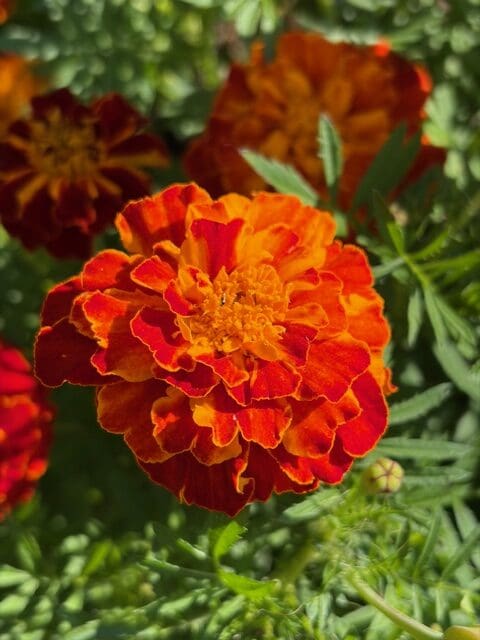
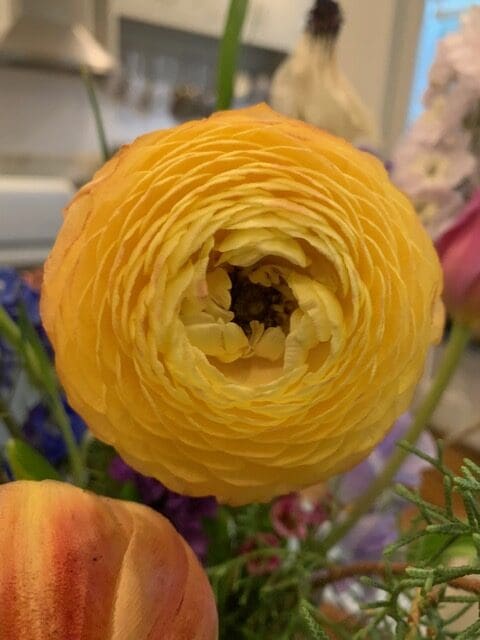
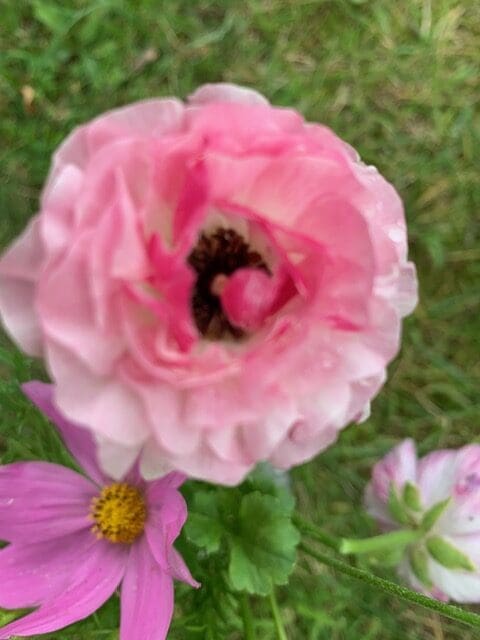
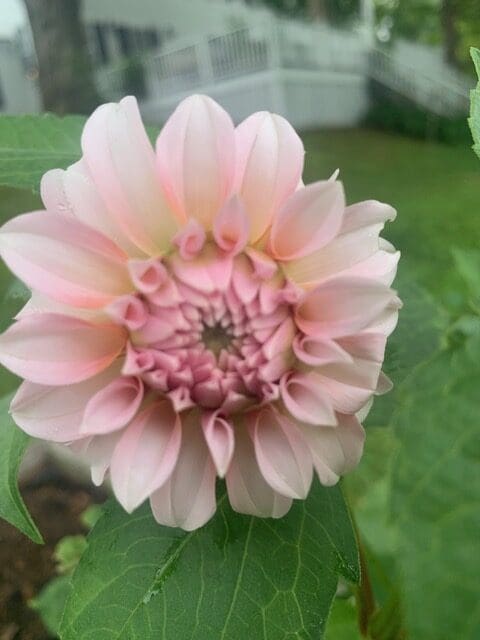
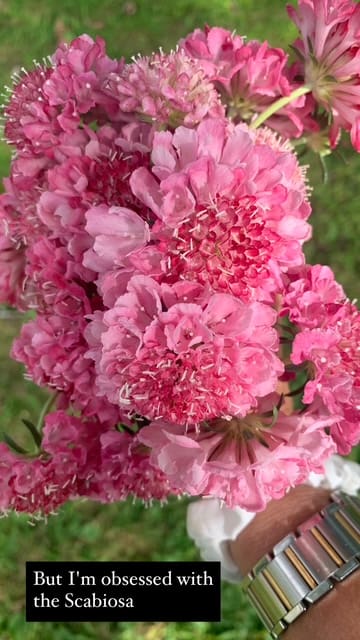
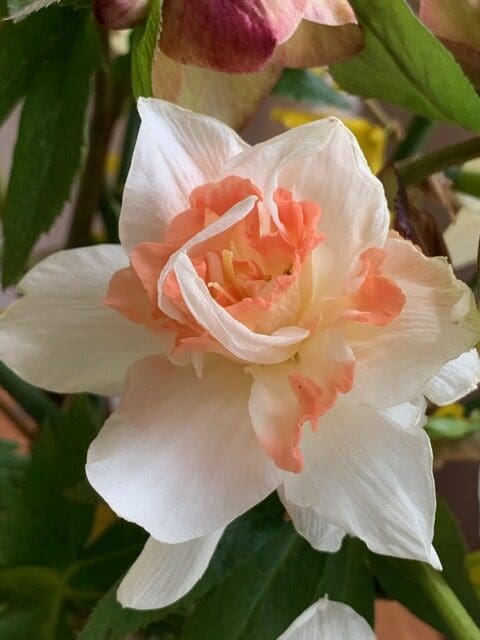
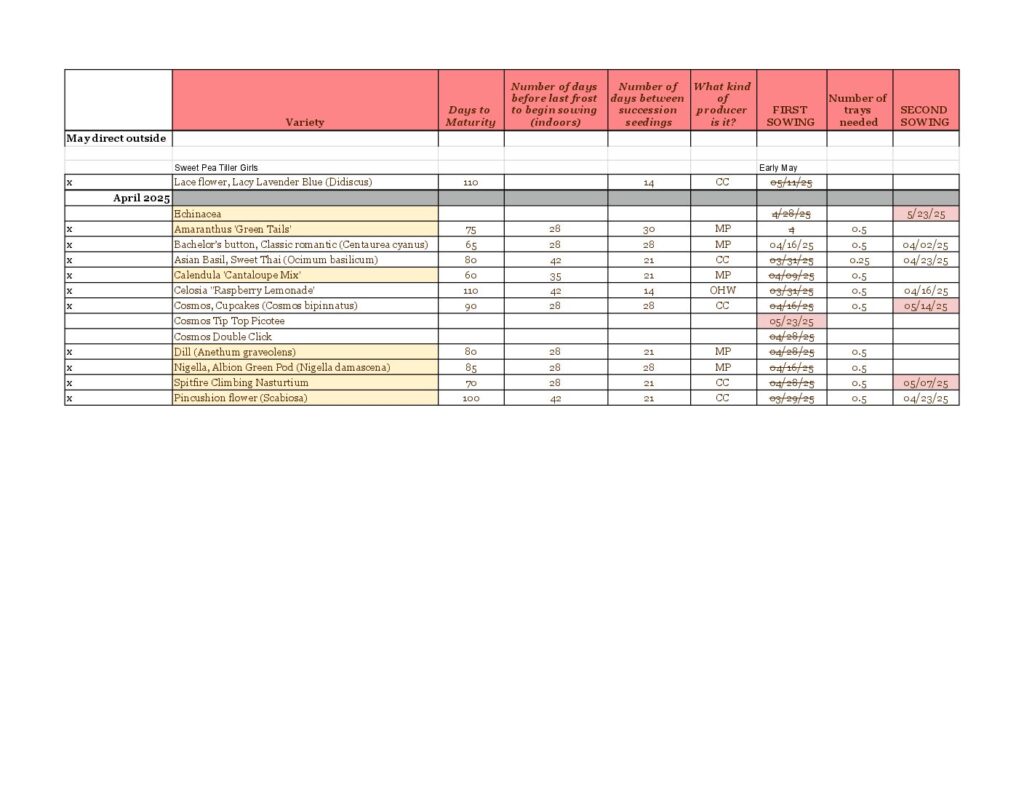
One of the things I am good at is research. I loved researching the different options, sourcing them, and documenting them in a spreadsheet with sowing, growing, and cutting timings.
Step 3: Get growing.
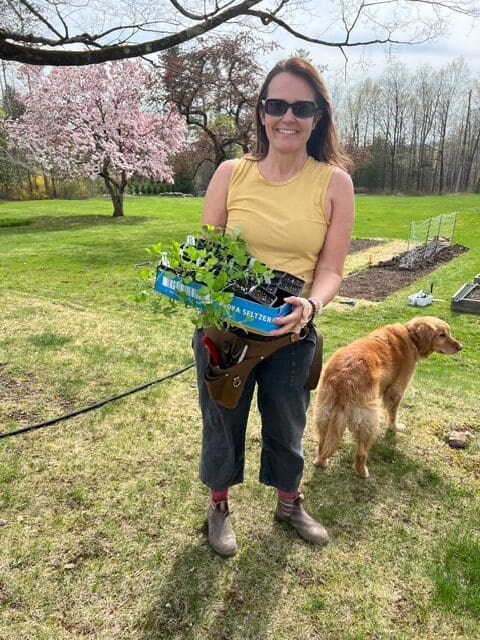
I mostly grew from seed this year and sourced most of my seeds from Hudson Valley, Johnny’s Seeds and Floret. I grew seedlings in the cottage using heat mats and grow lights initially because I don’t have a greenhouse, and it was an actual labour of love. Travelling up and down from NY to make sure they were doing well and recruiting friends to go check on them when I was travelling. I learnt that growing everything from seed is neither necessary nor practical. Sourcing and buying plugs will be part of the 2026 plan.
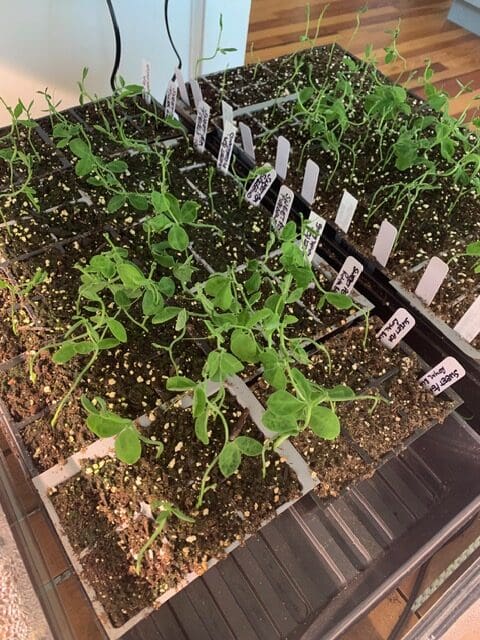
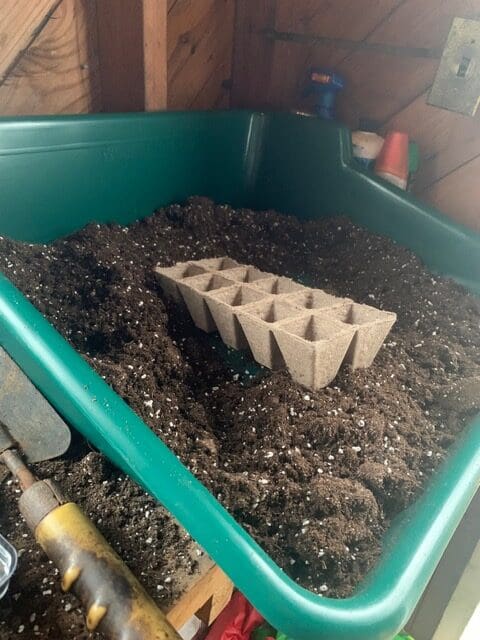
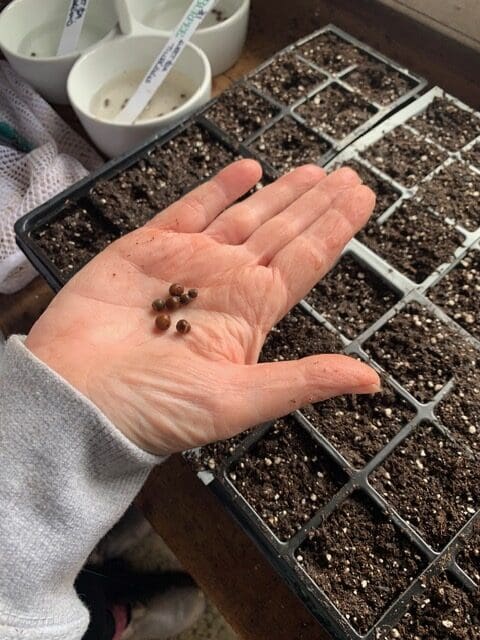
It’s helpful to plant seeds or plugs in two or three batches so that you have flowers ready to pick over several months rather than all at once. Examples include sunflowers, poppies, stock and celosia. Other flowers are cut-and-come-again, meaning they will continue to produce flowers after being cut. Examples include zinnias and pincushion flowers. That means you only really need one crop to be sown, as they will keep producing.
There are a few other things to consider before you plant your seedlings or plugs out into beds.
- Do you need irrigation? We did because of all the travelling and moving between Litchfield and NYC. I bought a simple irrigation set from Johnny’s Seeds, which worked great, and installed it myself.
- Do you want to use landscape fabric? Helpful in slowing down the weeds and for planting out, but not crucial. I used it on some beds but not others. Plants like zinnias, snapdragons and cosmos grow well with the structure of landscape fabric, especially because once planted, they cut and come again. Sweet peas do better without but do need a frame to climb up and the same for dahlias.
- Soil quality. The quality of your soil is so important. Do a soil test before you plant and amend the soil if necessary. It makes all the difference. We added a layer of compost after creating the new beds about a month before we planted anything, along with something gritty to improve drainage, because the soil is quite heavy and wet.
Step 4: Plan maintenance
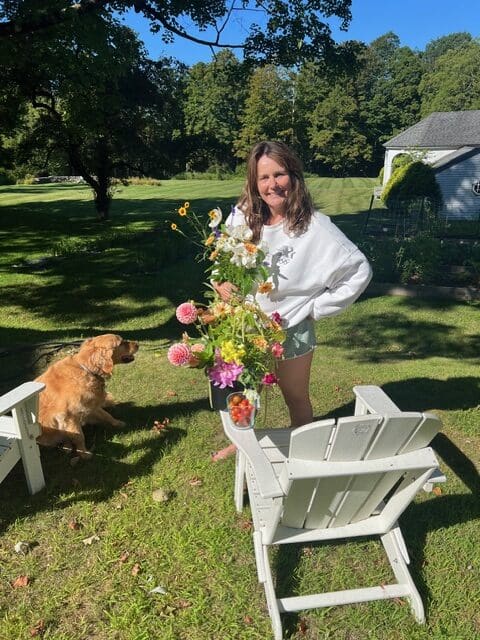
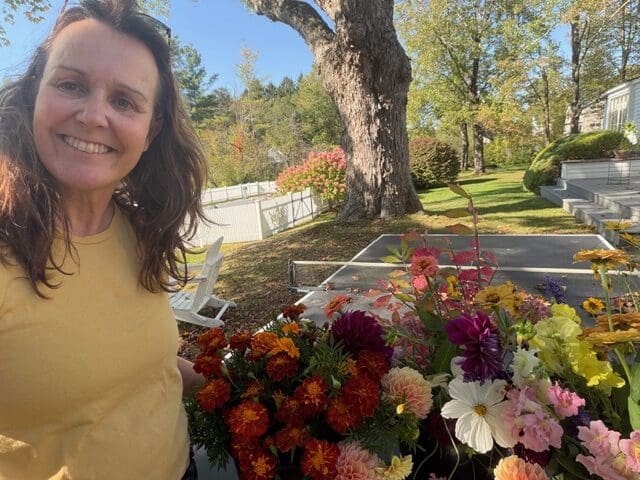
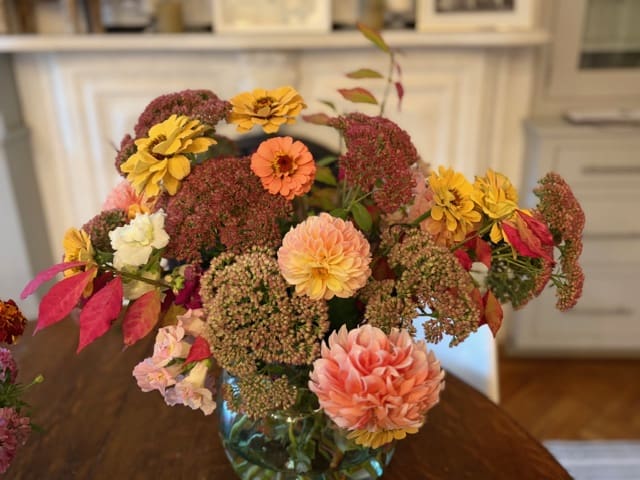
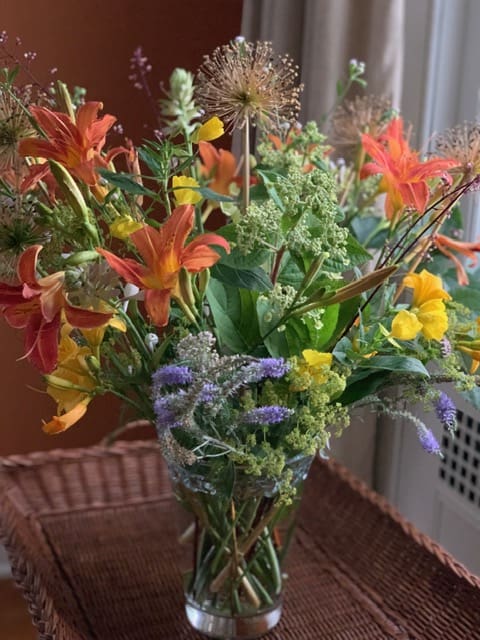
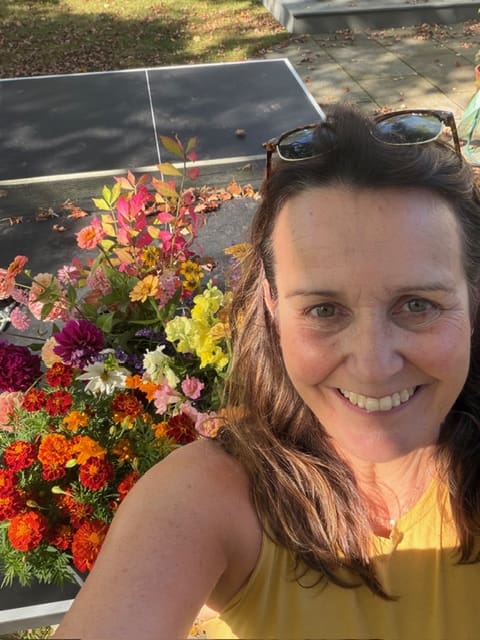
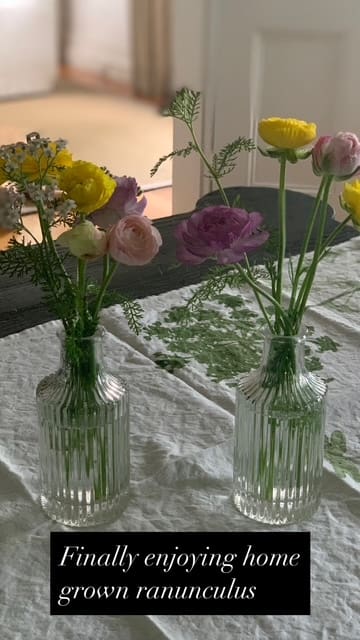
As I mentioned earlier, we travelled a lot this year, so I had to be smart with maintenance. The landscape fabric helped keep weeds down, the irrigation system worked really well during a very hot mid-summer, and I was lucky not to have any issues with aphids, slugs, or deer. However, it was a lesson in patience watching the flowers come to life. I planted ranunculus both in crates and in the ground, and did not see any blooms until late June. The sweet peas took a sudden surge in mid July, despite the heat and kept going through September. The snapdragons did great, as did my zinnias, cosmos and the scabiosa were gorgeous. We had salvia, coreopsis, and calendula later in the summer, and the black-eyed susan, anise hyssop, and coneflower from the perennial beds were terrific. Add in some early peonies, mid-summer roses and later-blooming dahlias, and there were flowers every week from May through to late October.
Step 5: Get cutting and creating.
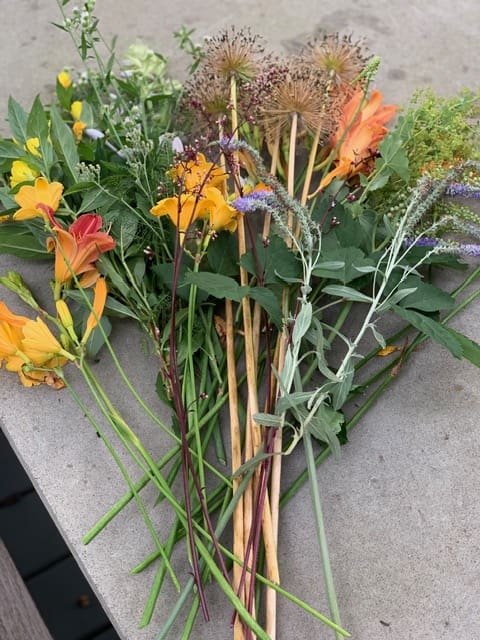
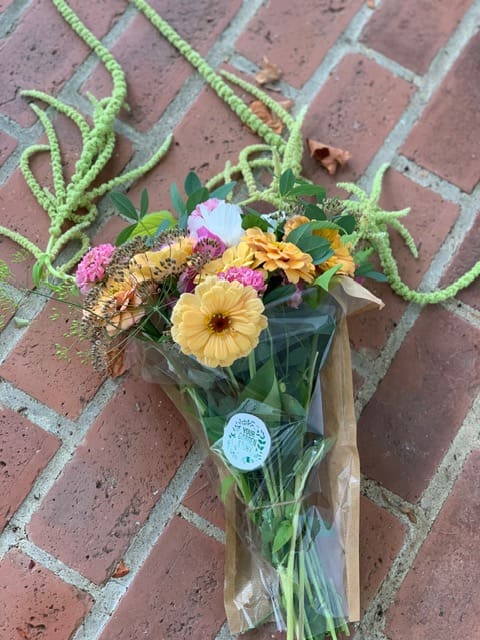
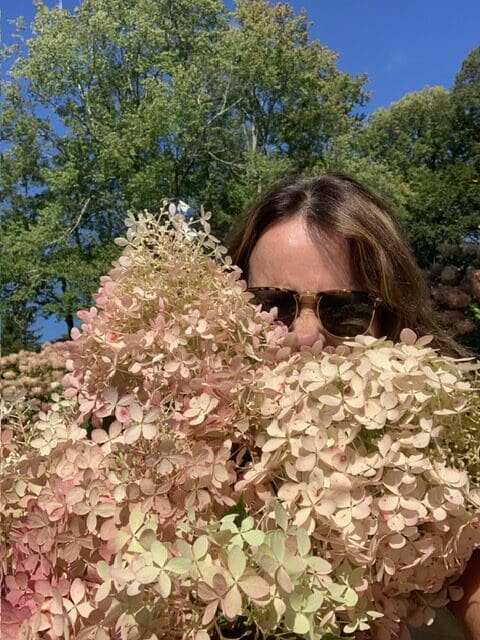
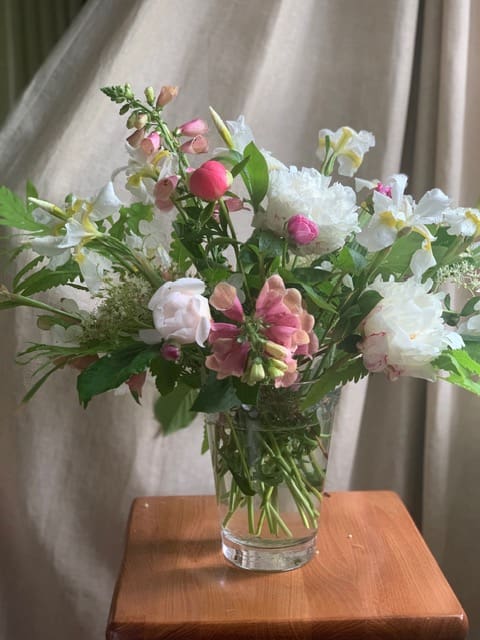
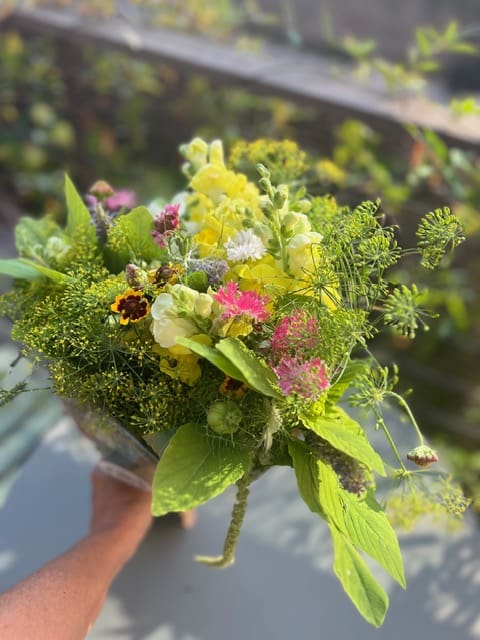
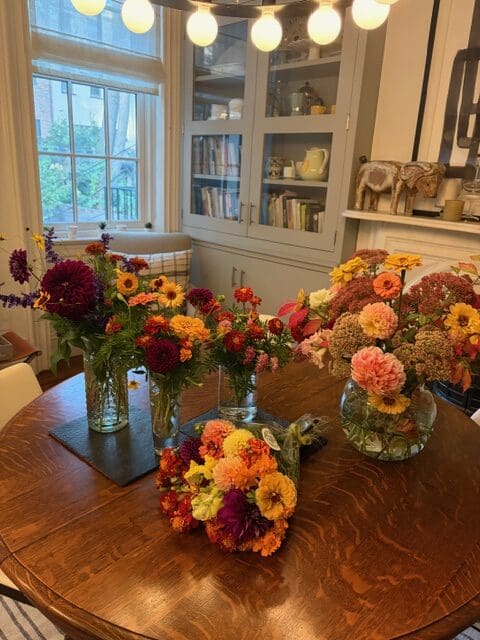
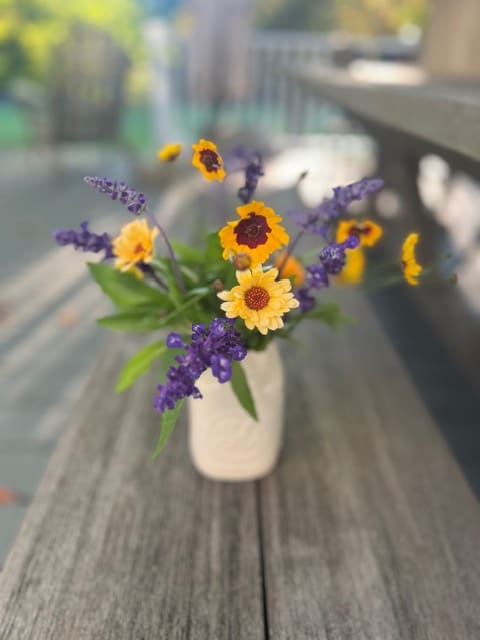
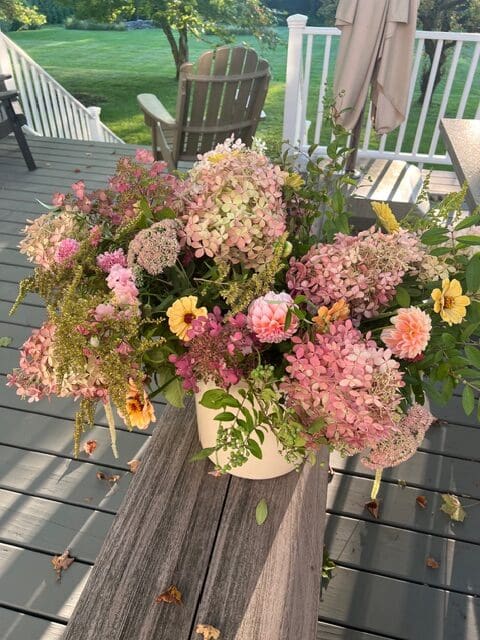
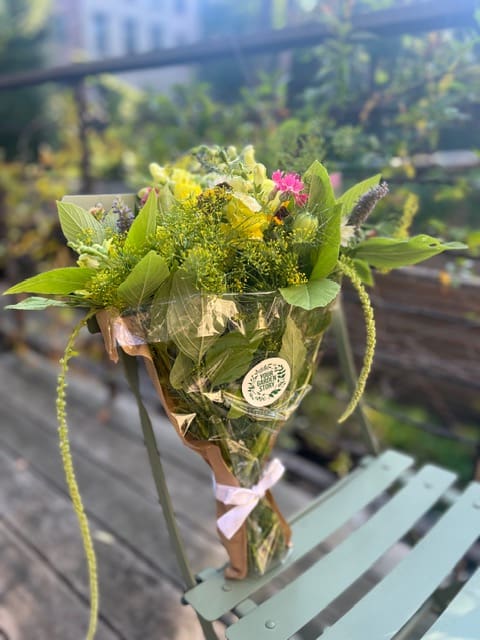
The enjoyable part is cutting and being creative with your flowers. The flowers do best if you cut regularly, and why wouldn’t you want to do that? I loved heading out early morning with my bucket of water and seeing what I could find. It was so interesting to see what was growing well and to discover new blooms that seemed to come out of nowhere. My snips and my buckets were my companions of a morning, and even on days when it felt like not much had happened, I came back to the kitchen with a bucket full of flowers. My routine was to let the flowers sit in cold water for several hours in a cool spot in the house before arranging. My hope was to produce bouquets, so I ordered specially designed bouquet wrappers in various sizes to see how that worked. I had studied some floristry as part of my garden design studies at NYGB, and that was super helpful. Sourcing greens from the garden was also a big part of creating beautiful displays. We also cultivate native plants in the garden, and later in the season, goldenrod and native asters were great additions to bouquets. I gave bouquets to friends and family throughout the season as part of my learning, though I didn’t achieve my goal of a pop-up for cut flowers.
Step 6: Review and plan for 2026
The season ended early November with a flurry of dried hydrangea, zinnias, stonecrop and native asters. Other than clearing out the beds and planting bulbs (something I didn’t do last year), it’s a good time to reflect on what you learnt from the growing season and start planning for 2026. It’s also a great time to order seeds, bulbs and tubers for next year, which sell out very quickly. So what did I learn?
- Growing flowers takes time and patience
- Just how much joy there is in watching a seed produce flowers
- Start earlier than you imagine
- A greenhouse or a hoophouse makes life more efficient
- I love growing plants and flowers for cutting
- A good tool kit is essential
- Irrigation is key for cut flowers
So 2026 looks to be another year of learning. We have considered leasing land nearby to expand our options, but with an 8-acre garden, I am sure we can carve out more space next year and start honing our flower-growing skills without complicating the operation by adding a second location. We will be digging out more beds here on Meadow Street in the early spring, and I plan to buy a second-hand mobile hoop house or greenhouse so we can start earlier with some late spring/early summer flowers like ranunculus and anemone.
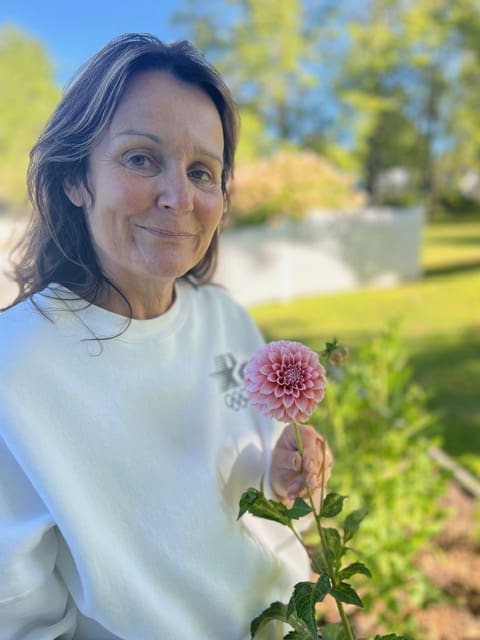
It is truly a joy, and I highly recommend giving it a go if you have any interest in cut flowers, even if it’s just to grow them for your own benefit. Sure enough, friends and family will see your lovely bouquets and want to share. I have the bug, and next year I hope to be knee-deep in blooms and able to share more of what I grow with my community.
Get in touch if you want more information on items included in this blog or need help sourcing any items listed. Your Garden Story is here to help bring out the gardener in all of us and make the world greener.
Love Wendy xxx