Our Gardening Friends and Family blog continues to entertain and inspire. The common theme is the shared growing experience, be it vegetables, flowers, shrubs or trees. So here again, by popular demand, is the next in the Gardening Friends and Family series written by my dear fellow gardeners Art, Marco and John. Let’s hear it for the boys!
I hope you enjoy reading them as much as I did – honestly, the personal stories make me smile from ear to ear.
Art Hewitt – Margate, England
‘Give me land, lots of land under starry skies above…..’(Cole Porter)
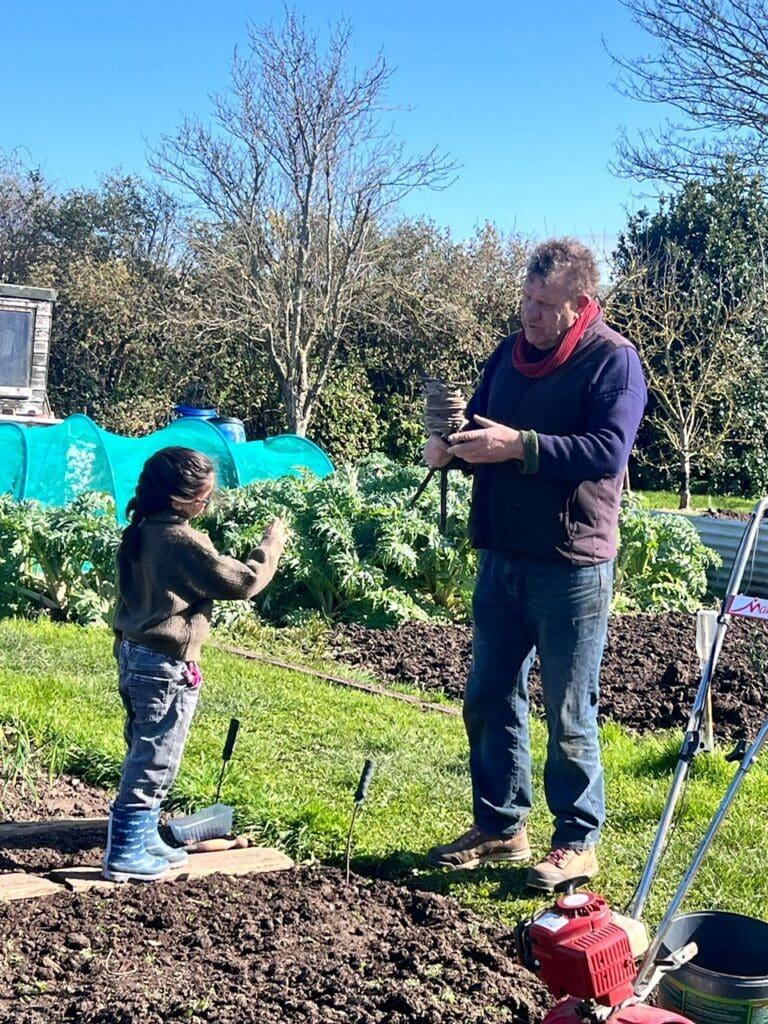
I was never the gardener. My partner Hilary has the green fingers. I fell into it, or rather Hilary fell out of it…. I was the one who built a workshop/studio on top of the vegetable patch at home, prompting an application for an allotment, which we received the week after Hilary tripped over some of my timber and broke her arm badly…..serendipity, some call it (Hilary called it a stupid place to leave my timber). Two decades later I am working two allotments (approx 250m2) and have never looked back. Learning to plant, tend, grow and harvest vegetables and some fruit has been a completely unexpected mixture of reward, disappointment, creativity and joy woven through the years. My interest is unashamedly appetite-driven… if I can eat it I’m interested. Flowers and blossoms have their place, I know, and are as important as everything else to support biodiversity, pollination and beauty in a garden or allotment. I also know you can consume many flowers and leaves, but a plate of petals doesn’t float my boat.
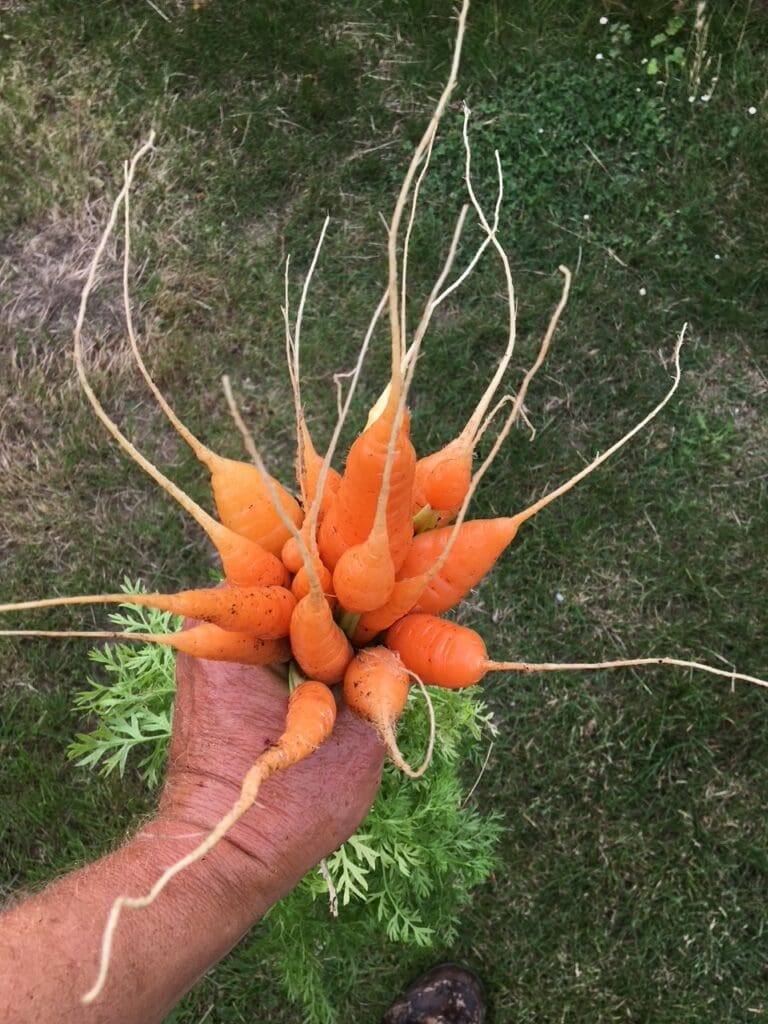
Let’s deal with rewards first. Fresh produce has to be out front. There is not a week in the year when we are unable to cook food with one or more ingredients grown on the allotment. With a house full of cooks who love good food, the pleasure we take from the taste and freshness of the produce we grow is palpable. Over the years we have learnt to embrace the seasons and the first pick of broad beans, asparagus and baby globe artichokes is greeted with great excitement and the last stored Crown Prince squash of the winter is treated with lingering respect. Being outside runs a close second. Whether it is a few hours from first light, a packed lunch in the shade of the apple trees or an early evening watering session as the shadows lengthen, the time outdoors always lifts spirits and gladdens the heart. The birdlife alone is stunning. Cetti’s warblers, whitethroats, chaffinches, green woodpeckers, kestrels, buzzards and the great carousels of gulls riding the high thermals are just some of the regular sights. The big skies mean you can see weather coming and judge when to call it a day.
The many disappointments in the early years have lessened gradually as I have learnt to take losses and crop failures as part of the process. Early on, any decimation of lettuces by snails or blackfly infestation of broad beans would send me into a spiral of despondency that threatened to undermine my early enthusiasm for the allotment. Realising that in any given year there is always something that doesn’t do well either because of bad weather, pestilence or neglect has made losses easier to bear and successes ever sweeter.
After a career working in the arts, I am often asked how my preoccupation with growing and gardening feeds my creative needs. Endlessly, I reply. It’s a different pace of creative expression, sensing and seeing the change of the seasons, rotating crops every year, planning the plot, sculptural support structures for beans, the tactile feel of the soil, the release of scent after rains. Then, of course, there are the Heath Robinson constructions for rain collection, repurposing items salvaged from skips and our site is peppered with compost bins fashioned from the remnants of Anderson shelters brought out from Margate gardens after WW2.
My 6-year-old granddaughter has her own patch on the allotment. A vegetable lover from birth, when asked what she wanted to grow on it at the age of 2, she said ‘Everything!’. Strawberries, beetroot, sunflowers, chard, carrots, tomatoes, cucumber, radishes have all flowed from her patch over the years and her unbridled joy when she unearths the first new potatoes of the season is a pure expression of what I feel with each tomato picked and pea podded every year.
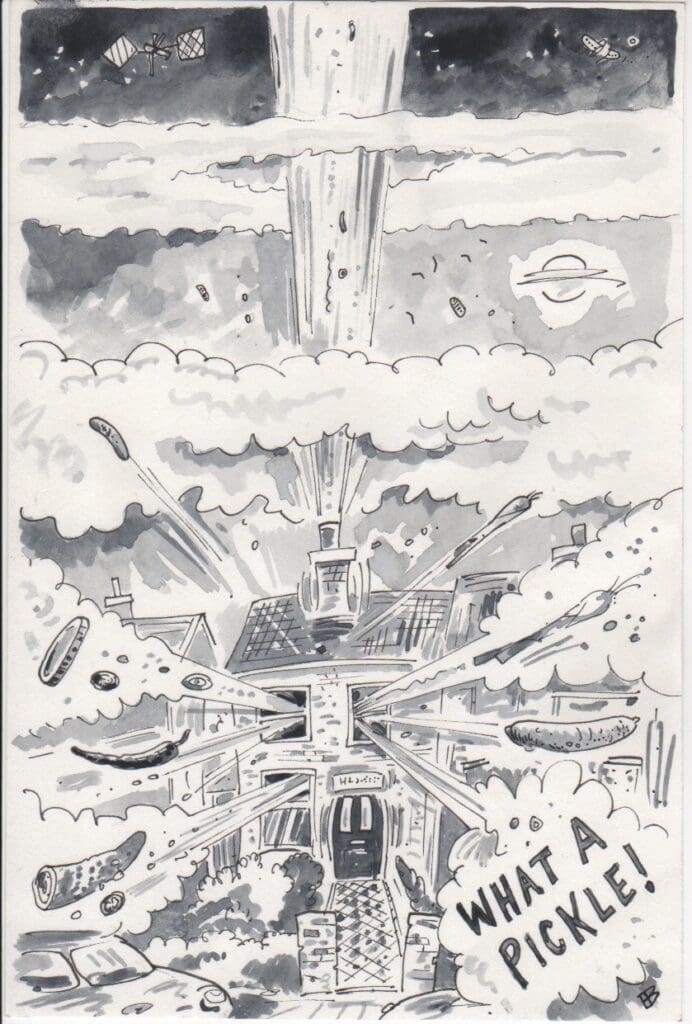
Hilary propagates most of the planting at home where the greenhouse and potting shed gradually fill to bursting from March onwards. It is her knowledge that has fed my practice together with observing the good ol’ boys at the allotments (some with over 60 years’ experience). Hilary produces seedlings faster than I can prepare ground at times and a successful year is one when I just about keep up. The changing weather is a challenge, long dry periods followed by prolonged bouts of rain and persistent winds. A good harvest is a delight and even a glut can be glorious (a cartoonist friend made light of our abundant cucumber harvest one year).
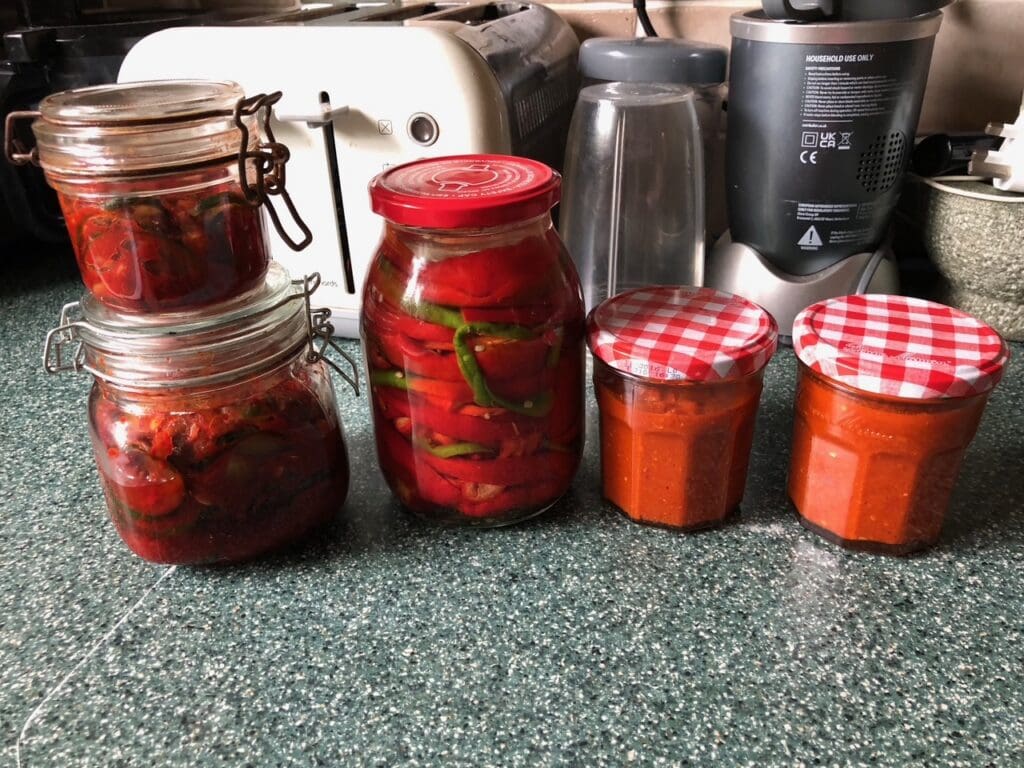
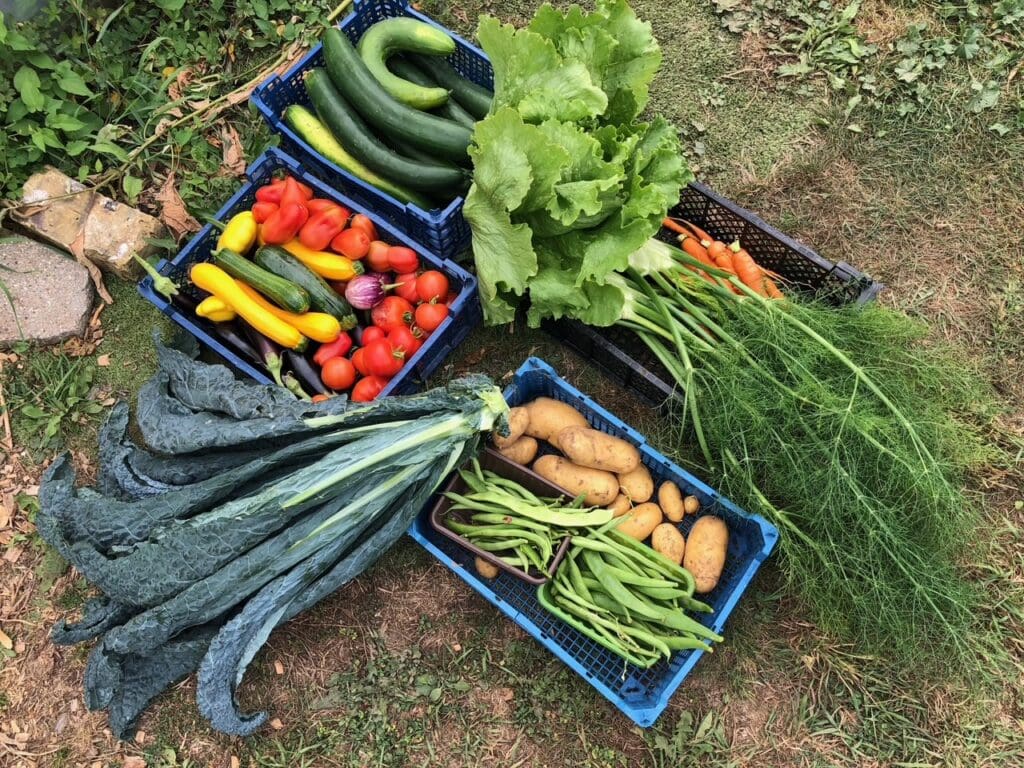
We process and freeze what we can. Make passata from San Marzanos, pickle cucumbers, make kimchi from cabbage or pak choi, make fermented chilli sauce and store potatoes, apples, squashes, onions and garlic to see us through the winter. There is rarely any waste, nor are we completely self-sufficient, but we don’t buy many tinned tomatoes these days.
There is always more to learn and new tricks to try. A couple of years ago I grew all our potatoes in seaweed foraged from the beaches. A great crop… and ready salted. It has been a great journey so far and time very well spent.
Marco Caffuzzi – Roxbury, CT, USA
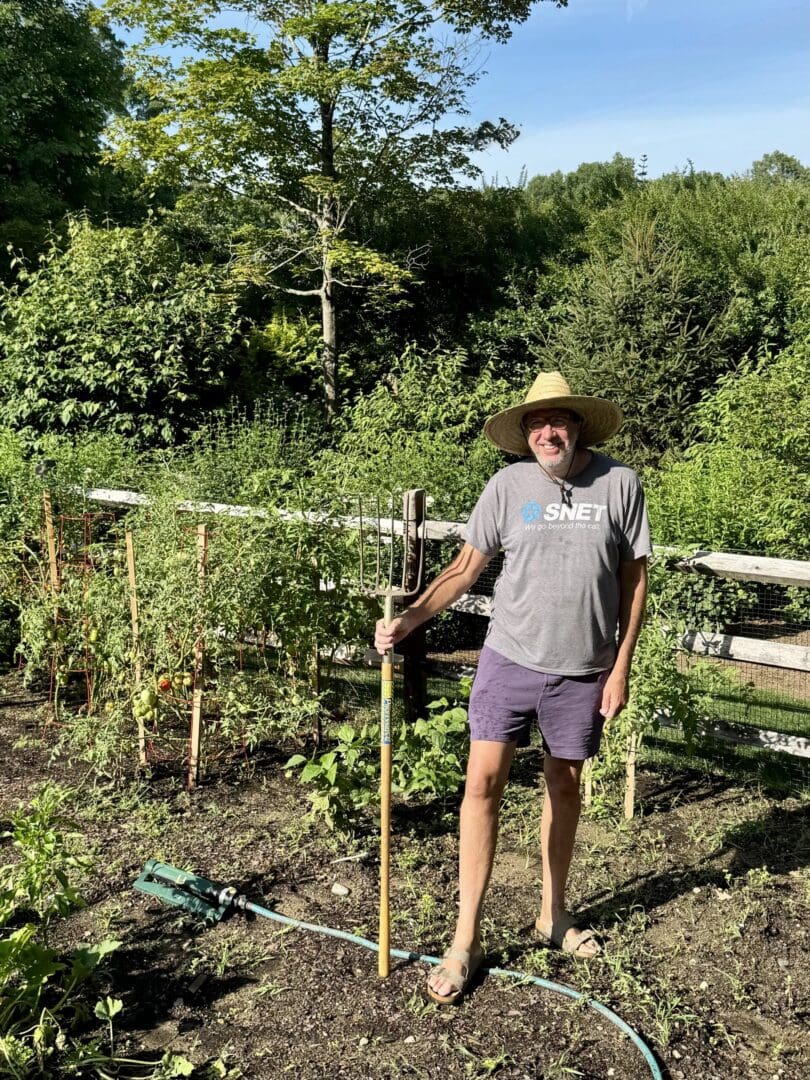
Returning to my humble 20’ x 30’ garden – the second garden in my life – after missing it for two weekends due to work and other commitments. Half the garden looks ok – a bit of weeding and cleaning up to do – but the other half, inexplicably, is a literal lawn of crabgrass. It’s at moments like this that I reconsider this gardening-thing. It’s not like I need this food to survive; I can go to grocery stores, or even local farm stands for my fresh produce. But then I hunker down, knowing I can’t leave it as it is; I cannot abandon it after having started it with such fervor just a few months ago. And so I dive in, strap on the knee pads, slather on the sunblock, grab a hat and a few hand tools, and I go to work. And after ten minutes, I remember why I have this garden, and I’m happy.
It’s meditative work. Very repetitive, I do it vigorously and deliberately, leaving no weed behind, working from edge to edge, back and forth. I get the same satisfaction I get when I do the dishes after a dinner party. I enjoy the process of cleaning up as much as the results. When people talk about starting a garden, they fantasize about the bounties of their harvests, of walking through the garden in the mornings to check on things, to commune with nature. That’s all true, but no one talks about the work, and the benefits to one’s soul by doing that work. That, in fact, is my favorite part of having a garden. The sweat, the hands-on labor. There’s no denying it, no escaping it, if you want to have a decent garden. You cannot ignore it and hope it goes away. And the escape I get from being on my hands and knees for hours, covered in dirt, sweat dripping down my face, is unparalleled. No ability (or desire!) to check my phone. No distractions except maybe a radio propped up on the fence post playing in the background. For a guy who is “on” all week long at work, nothing beats unplugging in this way.
I only started gardening last season, finally realizing on a dream I’ve long had but long deferred as my wife and I raised our family, and I worked. Now, with kids grown and work more manageable, I have the time to consistently devote to the garden. Where did this dream come from? I know exactly. I grew up on a 6-acre property in suburban Westchester County, which at the time was rather rural. My father was a lawyer, working in New York City, but who regularly gave his whole self over to nature and the outdoors every weekend. He was not the typical “weekend warrior” as many people are. Instead, he brought a deliberate and creative approach to all things landscape and garden related. He was always interested in the unusual and willing to take chances – thus the scores of specimen trees that dotted our property, the “hah hah” berms he constructed to conceal certain landscape features, and his grove of Holly trees. I worked alongside him as a child, then as an adolescent, and then as a young man, digging, planting, transplanting, pruning, watering, etc. The juxtaposition of my father’s lives – at once a lawyer in his suit operating in the world of corporate titans, and at the same time a simple man who gently and caringly tended to his plantings, his garden and various other follies with nature – energizes me to this day and motivates me in the conduct of my own life. In fact, it is his hands that I think of the most. This man shuffled paper for a living, had the most beautiful cursive writing and wielded the phone the way an artist wields a paintbrush. But at the same time, he had these rough and gnarled hands, coarse with calluses from years of digging, moving rocks, and doing all things outdoors. Those hands said it all for me — the ideal embodiment of things cerebral and things natural.
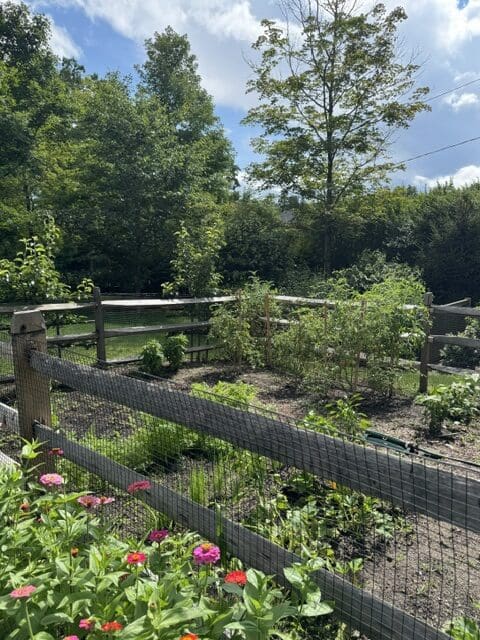
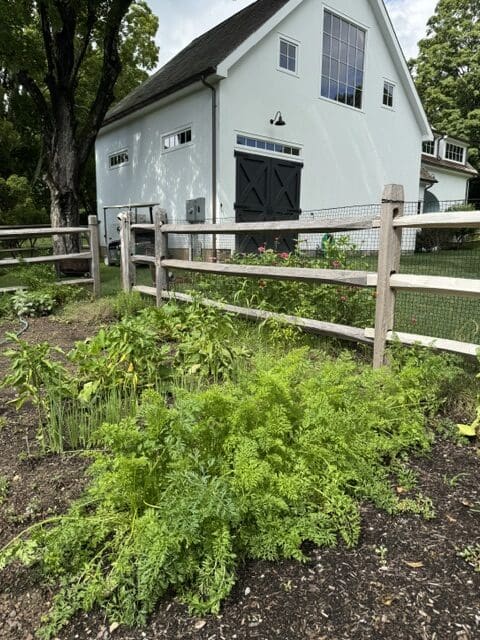
It amazes me what the act of creating a simple garden can do – what motivations it can reveal and thoughts and memories it can conjure. My garden started as a fantasy, and I did not have much direction in doing it other than knowing I wanted to get my hands dirty. After the success of my first garden, I was all in, already planning this year’s garden in late 2025. But it turned out what motivated me wasn’t just the desire to sweat and do the physical labor, as I had thought. Instead, what I realized was that it was in fact my own personal tribute to my love for my father — my Connecticut homage to him. From the very first spadeful of soil I turned over, I realized I had been missing this as I felt an immediate connection to the memory of my father, which, it turned out, was exactly what I wanted. My father died about 5 years ago, and I have always been a little sad that I didn’t get the chance to dig in (pun intended) to my gardening when he was alive. But with my garden, I feel a bit closer to his memory.
John Jakimetz ‘The Casual Gardener’ – Litchfield, CT, USA
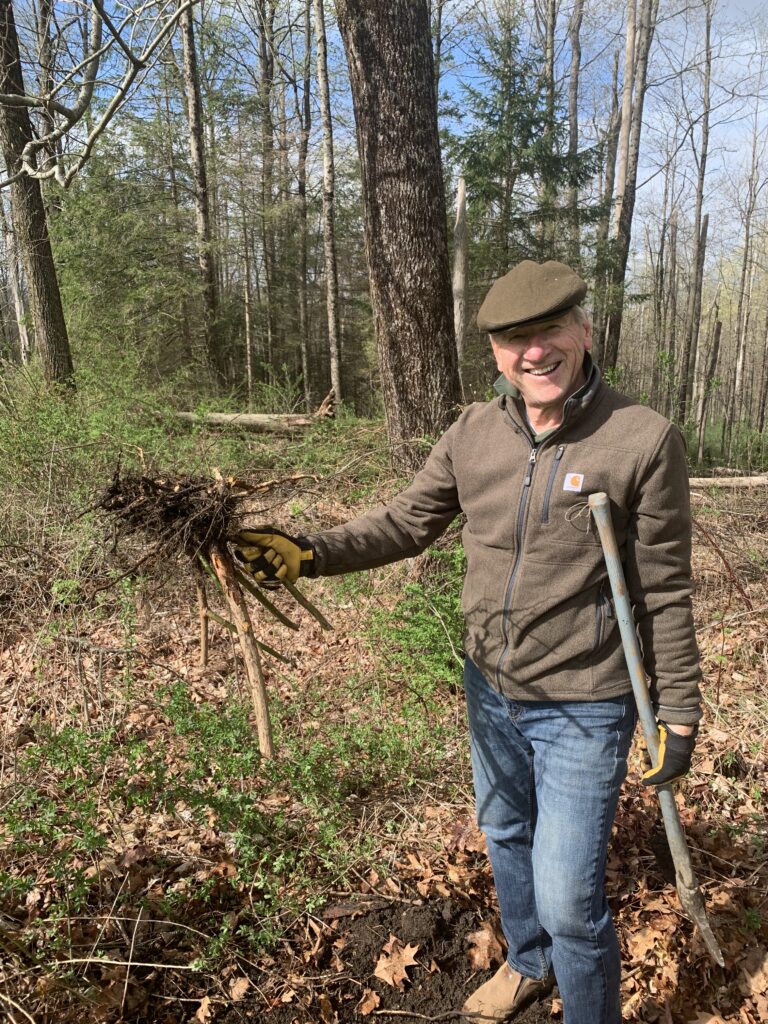
A walk around our country neighborhood will show the strolling observer that some gardens are pictures of precision, flowers lined up like soldiers on parade, hedges, ornamental trees and flowering bushes all arranged like sections of the Mormon Tabernacle Choir, all framed by mounds of deep brown mulch and a pristine carpet of green lawn.
While I applaud and enjoy such a regimented display, my heart leans more to the laissez-faire garden. A lawn that is green but not necessarily all grass species, flower beds planted with perennials requiring minimal attention, a layer of leaf mulch from our recycling center (free of charge) and a smattering of trees which are left to their own devices.
There are some issues, however, that even a casual gardener can not ignore: invasive species. These are plants which some gardeners thought would be a unique accent to their exotic garden. Connecticut’s “Invasive Plant List” includes Goutweed, Mugwort and Hairjoint. One would think the names alone would tip off the knucklehead not to plant them. The northwest corner of Connecticut has a scourge of meadow and woodlands, namely “Rosa Multiflora”. A thorny Asian shrub with a growth rate of 1 to 2 feet per week, with the mature plant distributing as many as 10,000 seeds, in addition to propagating through its root system. The result of not eliminating it from your property quickly will be a tangle of impenetrable thorns like something out of a Grimm’s fairy tale.

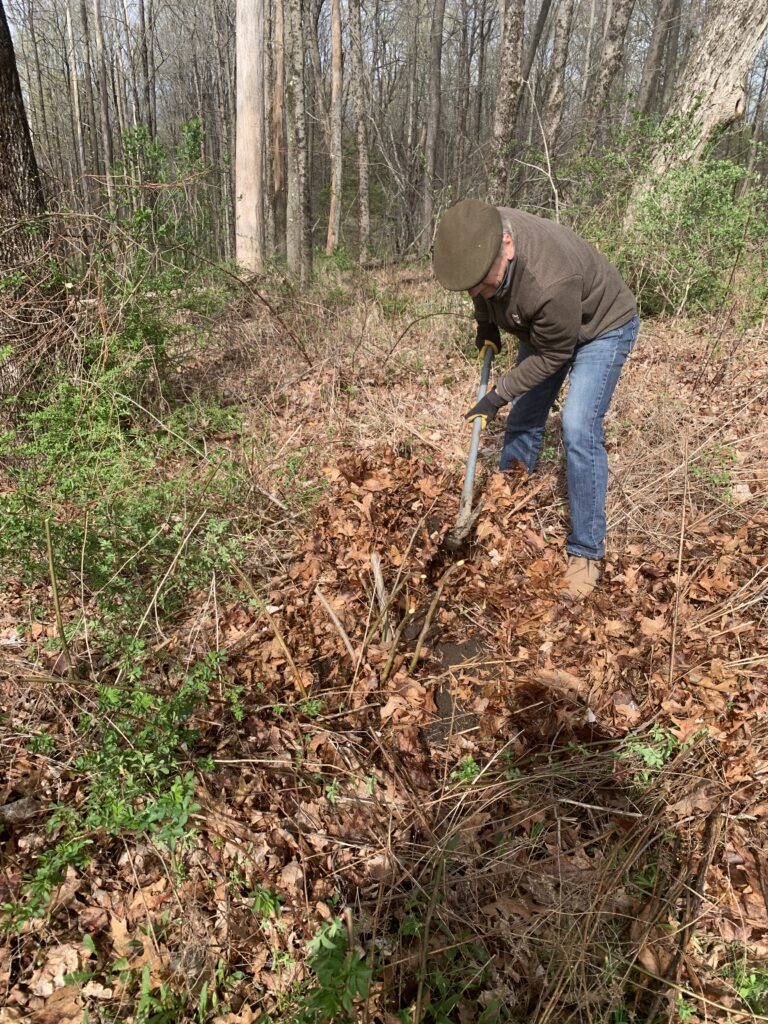
Wendy and I have this problem, and so here is the battle plan. First, get a pair of pruning shears, preferably ones with long handles, as the thorns are sharp. You will also need an adze or mattock for hacking out the roots. Begin shearing the branches from the end; one-foot sections at a time allow one to clean up without too much pain. Work your way down to the root ball, leaving about six inches of stem for a removal handle. Next, take your adze or mattock and cut around the root ball, severing the roots. Pull up the roots and residual stem, and Bob’s your Uncle. Move on to the next one, etc.
Pulling them up is as enjoyable as the G&T you drink as a reward for a job well done.

If you have stories about your garden, please send them to info@yourgardenstory.com. We can publish more here later in the year. We would love to hear from you.
Your Garden Story. Here to help us all become gardeners and make the world greener.