It’s nearly thirty years since I last attended the Chelsea Flower Show. We were living in a small rental flat in London with no garden. At the time, I had to visit my mother’s garden in Hertfordshire to stay connected to nature, and my fingers were a very pale green. We loved the atmosphere of the show, the exotic plants and the hospitality! The Chelsea Flower Show was first hosted by the Royal Horticultural Society (RHS) in May 1913 and became so popular that the Royal Hospital at Chelsea became its permanent home. Now, more than 160,000 visitors attend every year, and the BBC covers the event all week, enabling millions of people worldwide to experience the show.
Three children, and a move to NYC meant it would be a long time before I got the opportunity to go again. 2025 was that year. Our eldest daughter’s wedding in May in Italy meant I was on the right side of the Atlantic at the right time. With a whole new perspective, a passion for all things garden, my show research done in advance, and my dear friend Katy to keep me company, off I went. All I can say is WOW, WOW, WOW and quite literally that is what I was muttering under my breath as I took in Chelsea’s sights, smells and sounds. I was so inspired to write this blog when I returned to the US to share my top picks of gardens, plants, and people.
Let’s start with the show gardens. There are more than 30 spectacular Show gardens, each trend-setting. The theme for this year was ‘Your Space, Your Story’ with an emphasis on how we individually express our perspectives and joy through our gardens. A theme close to home is reflected in the mission of Your Garden Story. The show gardens are works of art. The experience of walking around a place with such a bounty of planting is transportive. You are immediately taken to a new place, from temperate rainforests to the beaches of Scotland. This year’s gardens drew on nature, combining native wildflowers with more exotic cultivars. Native foxgloves and cow parsley are frequently featured in the show gardens, and the planting is very natural.
Favorite gardens?
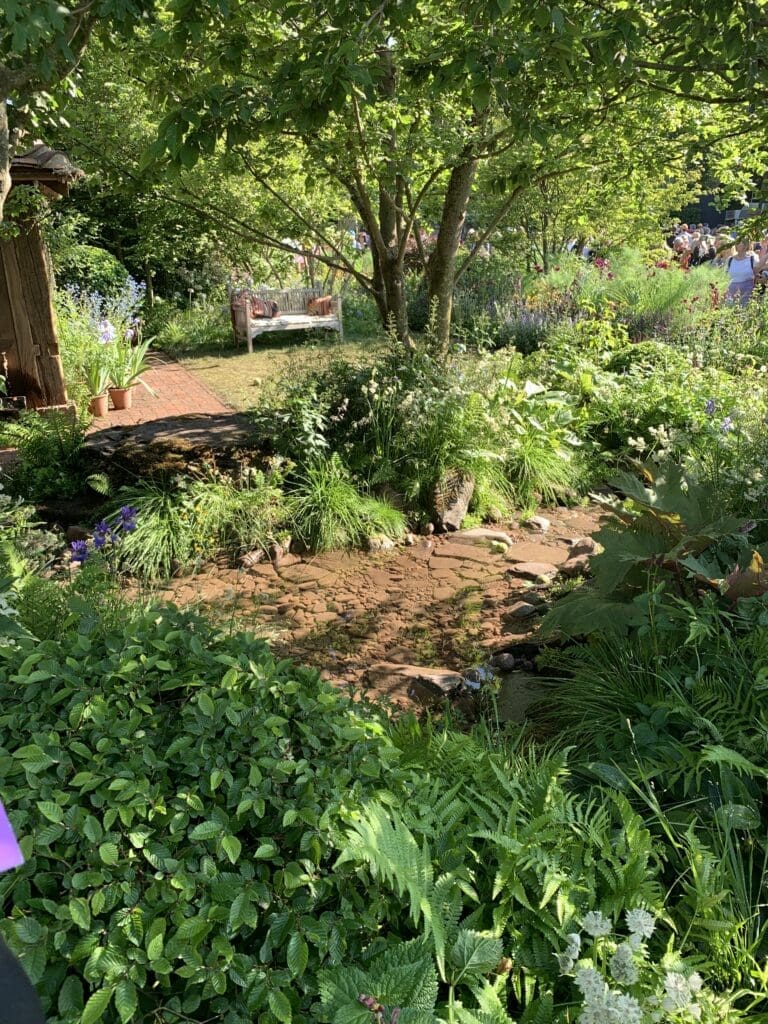
The Glasshouse by Jo Thompson is a garden full of jewel-like colours and fragrance, with masses of beautiful plantings and a gorgeous, tranquil pool. The planting is feminine, and, along with gorgeous roses, ferns, and grasses, it was the multi-stem trees that really opened out the light and created a beautiful canopy over the garden.
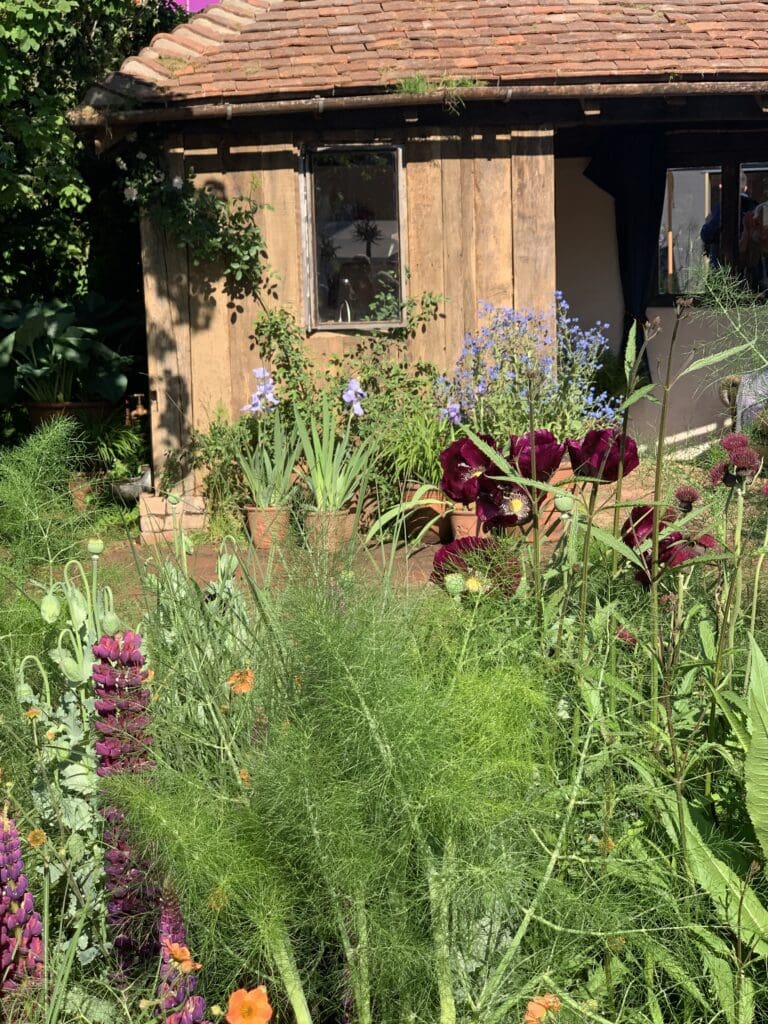
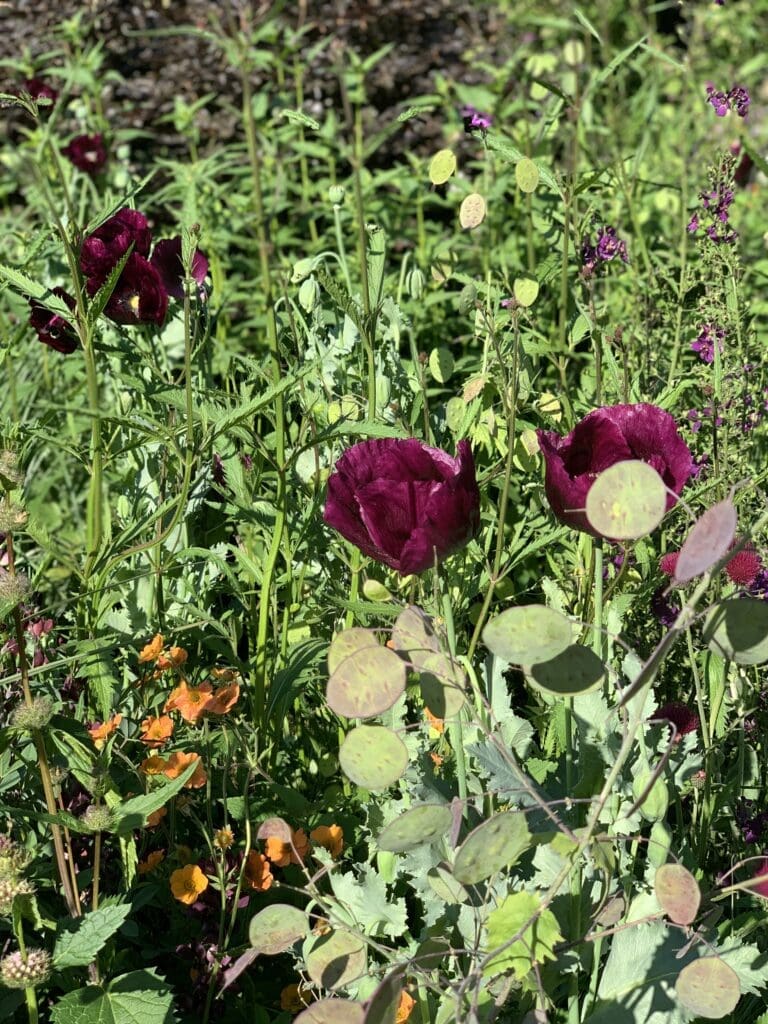
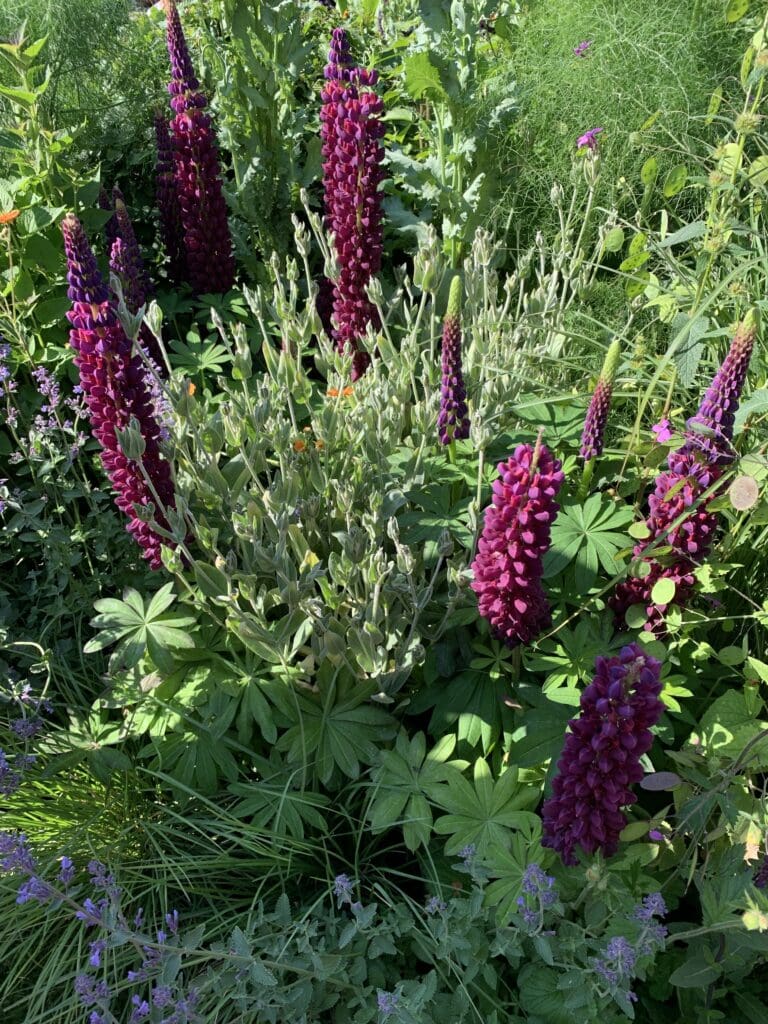
Monty Don’s Garden for Dogs, which had received plenty of buzz, was full of charming details, like a small water feature for dogs to cool off in, inspired by the stream in Monty’s garden, and winding paths designed to mirror how dogs explore. The planting was exquisite: beautiful deep purple lupins, poppies, verbena, and foxgloves, which could be easily replicated in your garden.
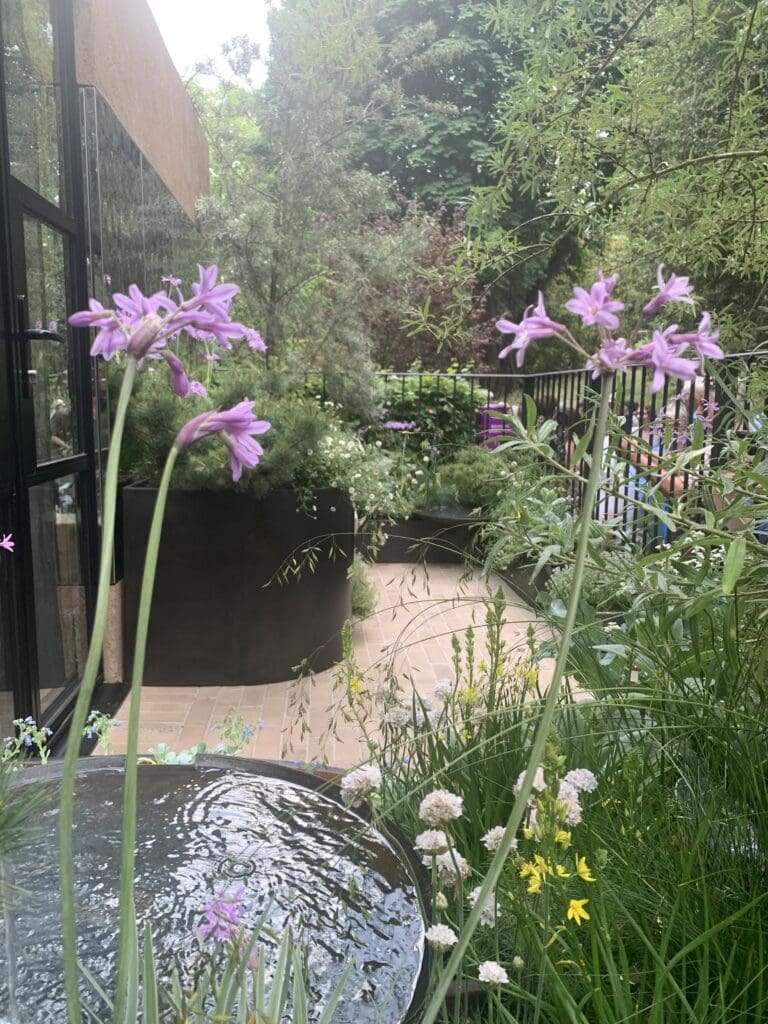
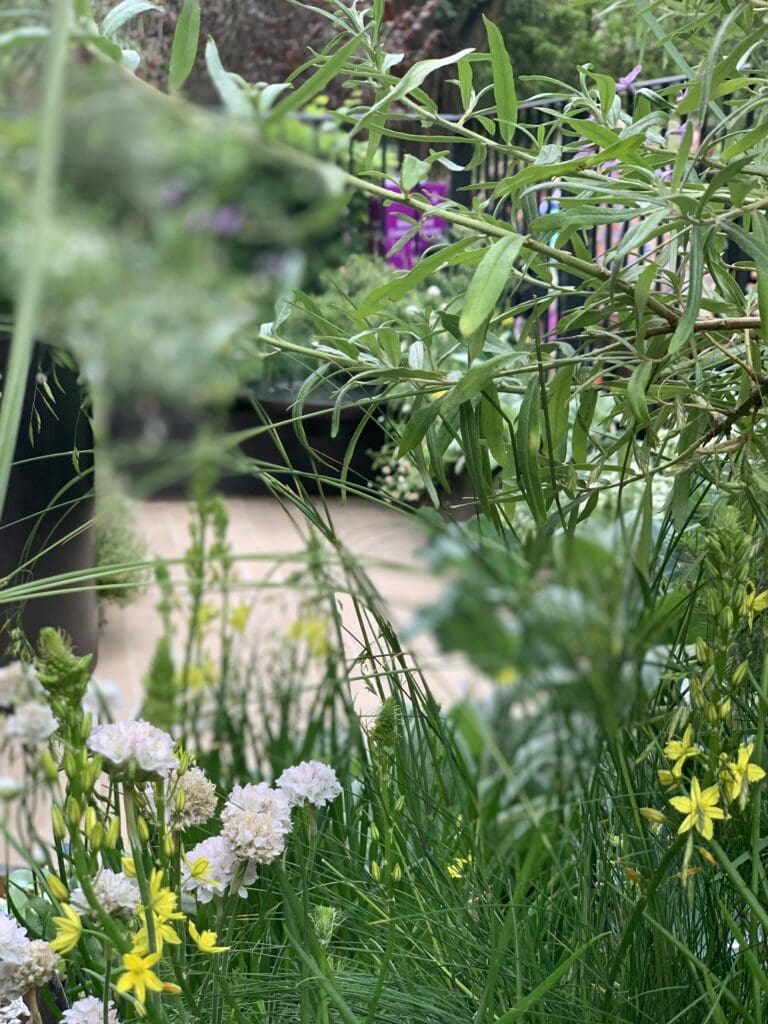
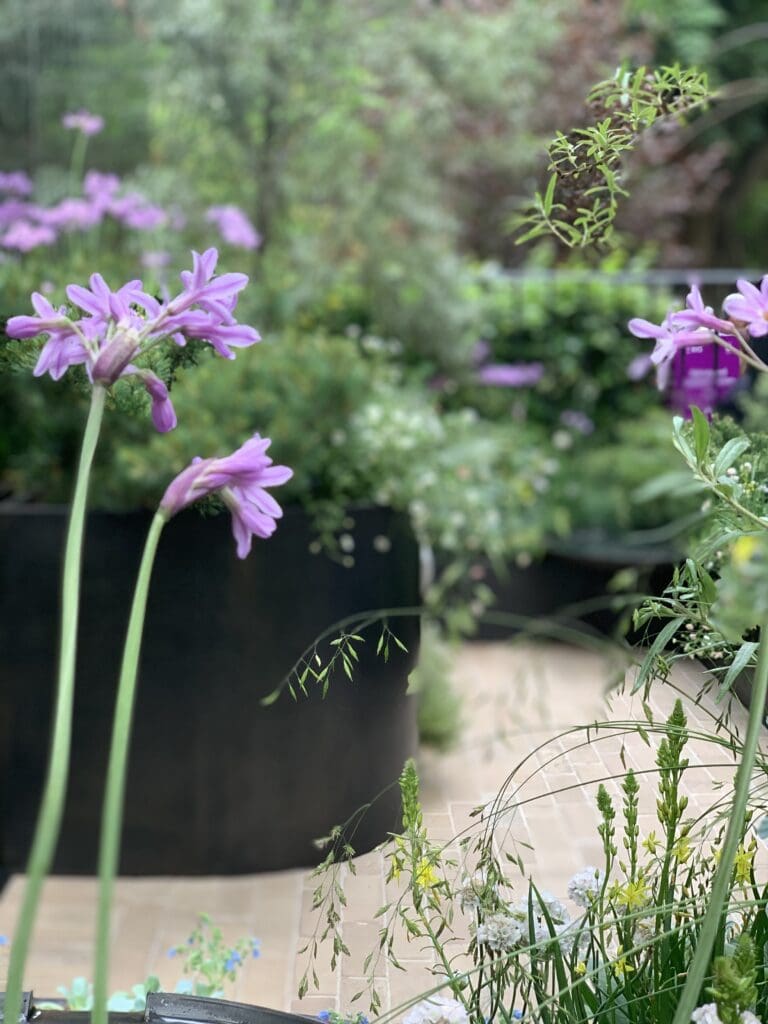
The Blue Mind Container Garden, created with the Ocean Conservation Trust, invited reflection on our connection to water and the importance of protecting our habitat. The sand-coloured tiles were created using discarded seashells, and the metallic-clad walls looked like wave patterns—breathtaking for such a small space. The plant list was coastal and drought-tolerant, including ornamental pine trees, delicate fleabanes, and rosemary.
Favorite plants?
There are so many plants in both the show gardens and, of course, the specialist growers’ pavilion. It is hard to pick favorites, but here are those I have been dreaming about.
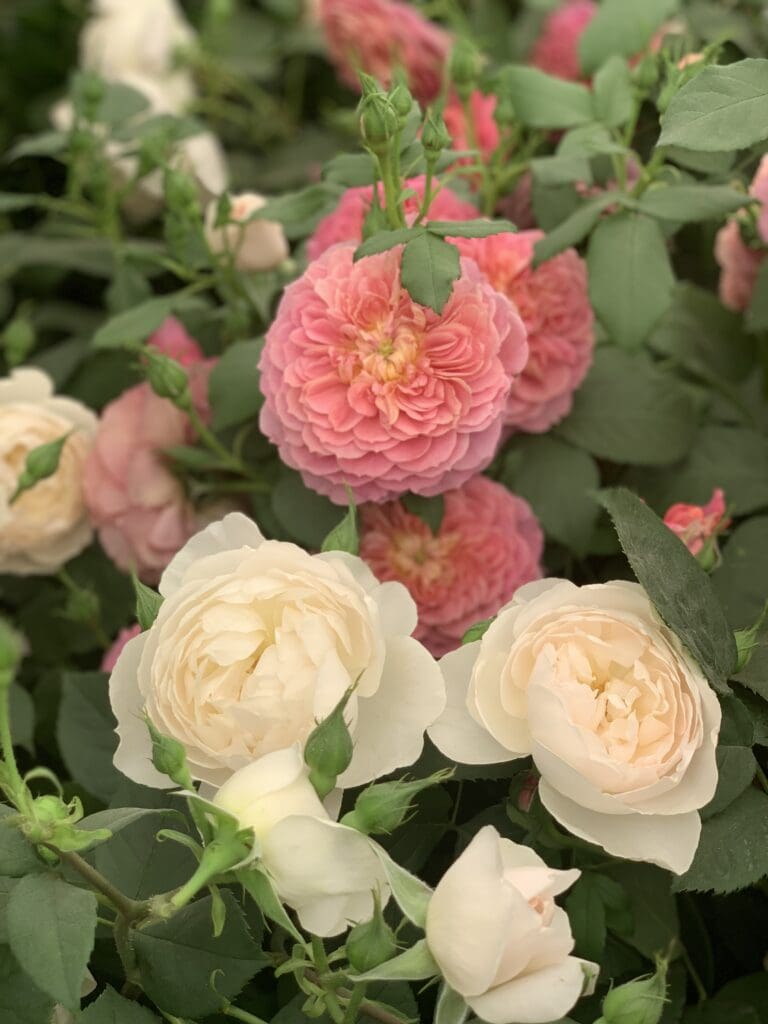
- Rosa‘ Emma Bridgewater
- Astrantia‘ Burgundy Major’
- Lupinus‘ Gallery Red’
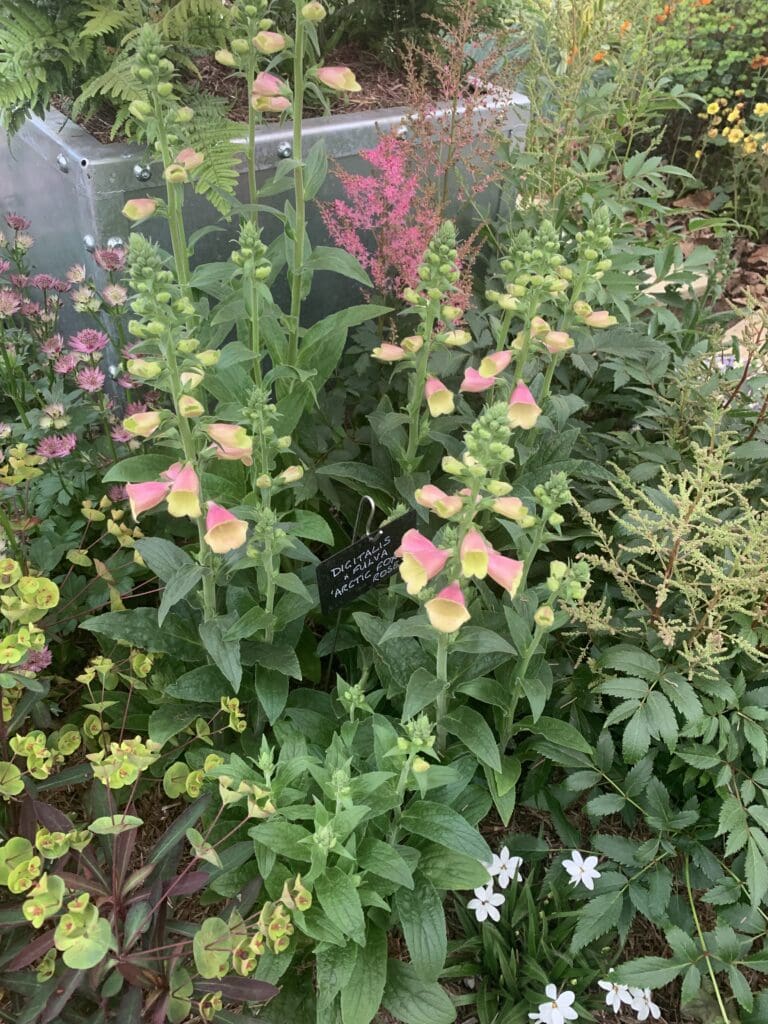
- Digitalis‘ Arctic Fox Rose’
- Scabiosa‘ Pink Mist’
- Geum rivale
- Papaver somniferum’ Lauren’s Grape’
- Phlox drummondii ‘Creme Brulee’
- Valeriana offinicalis
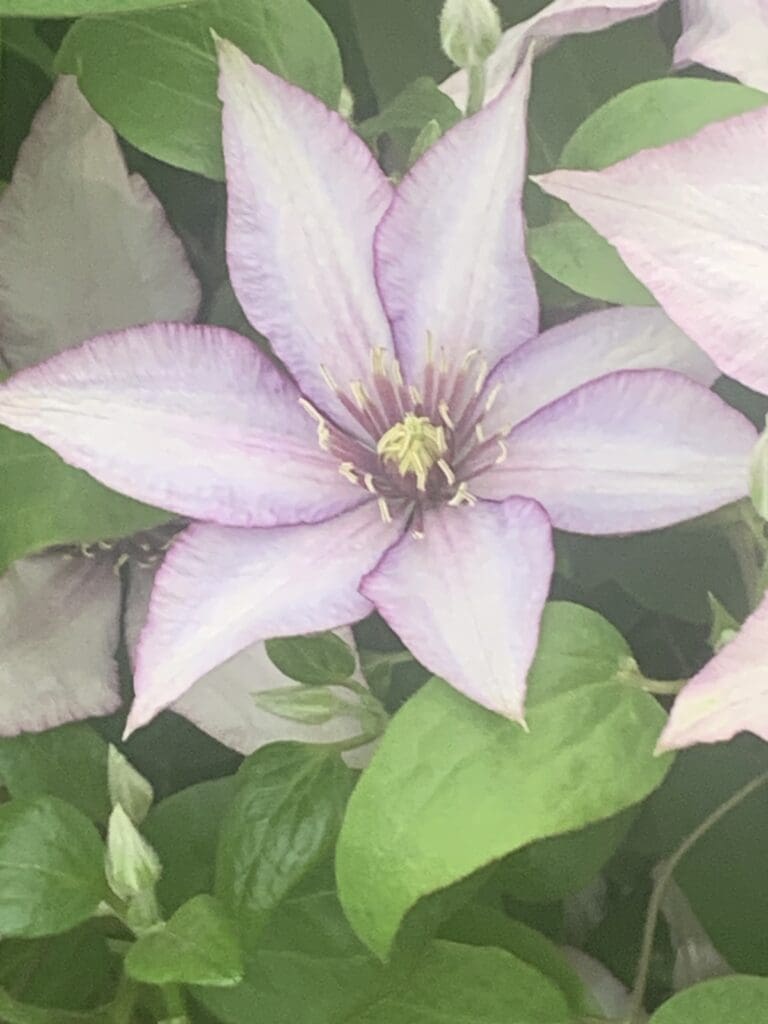
- Clematis‘ Samaritan Jo’
- Stipa tenuissima
- Rosa ‘The King’s Rose’
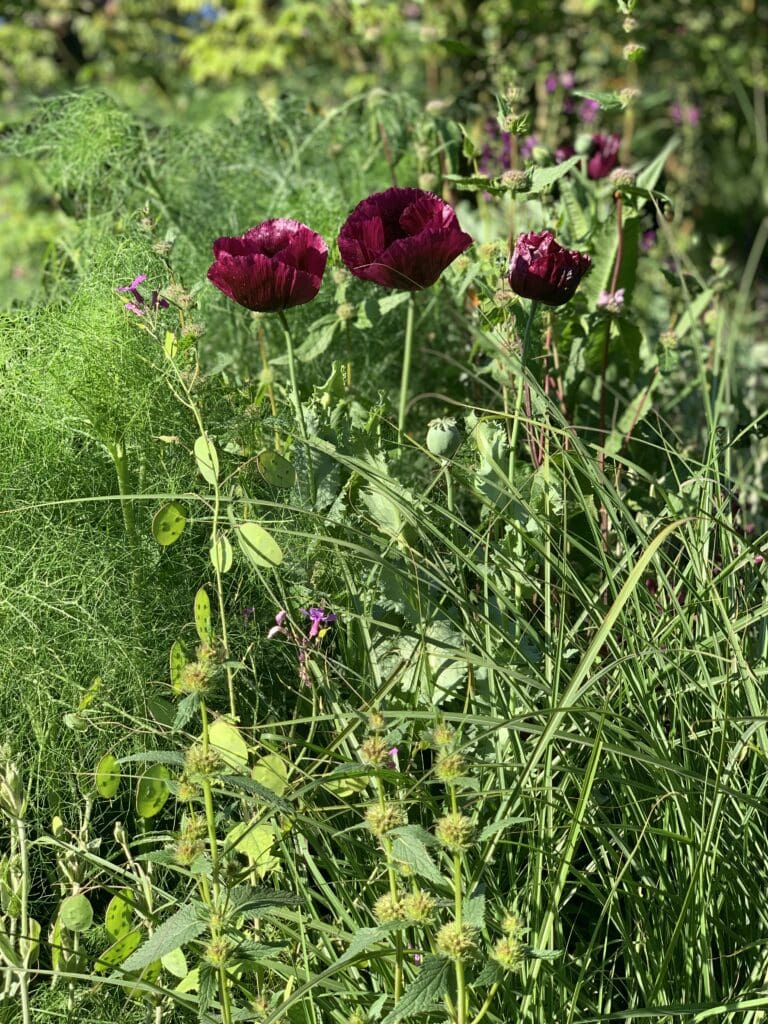
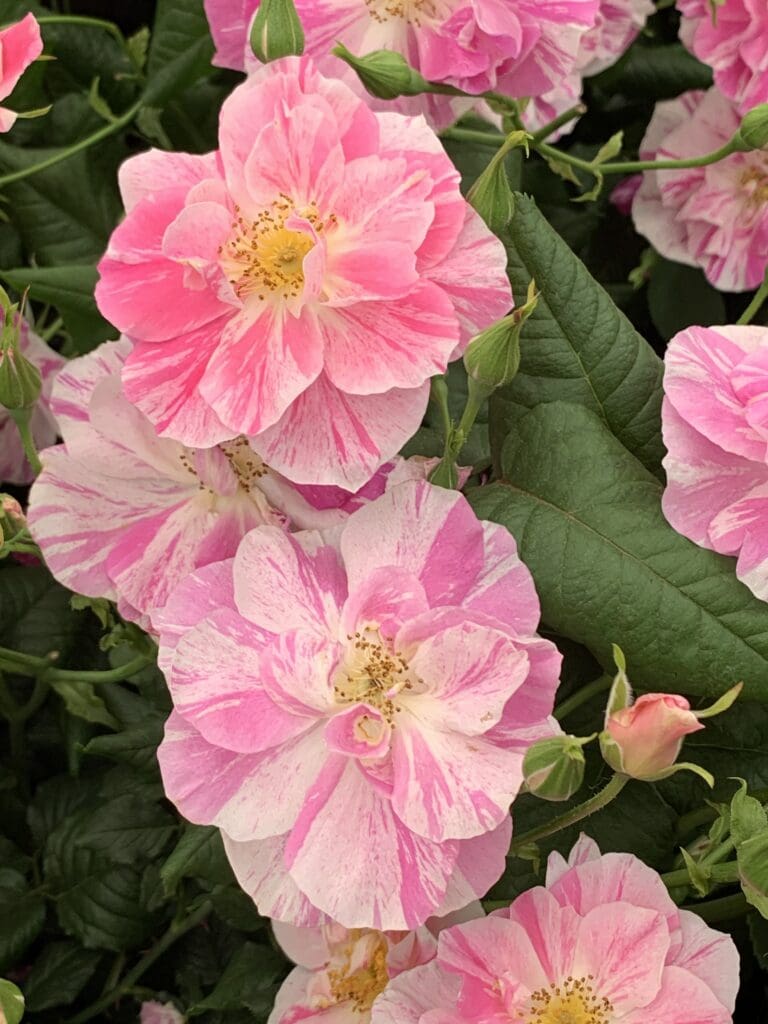
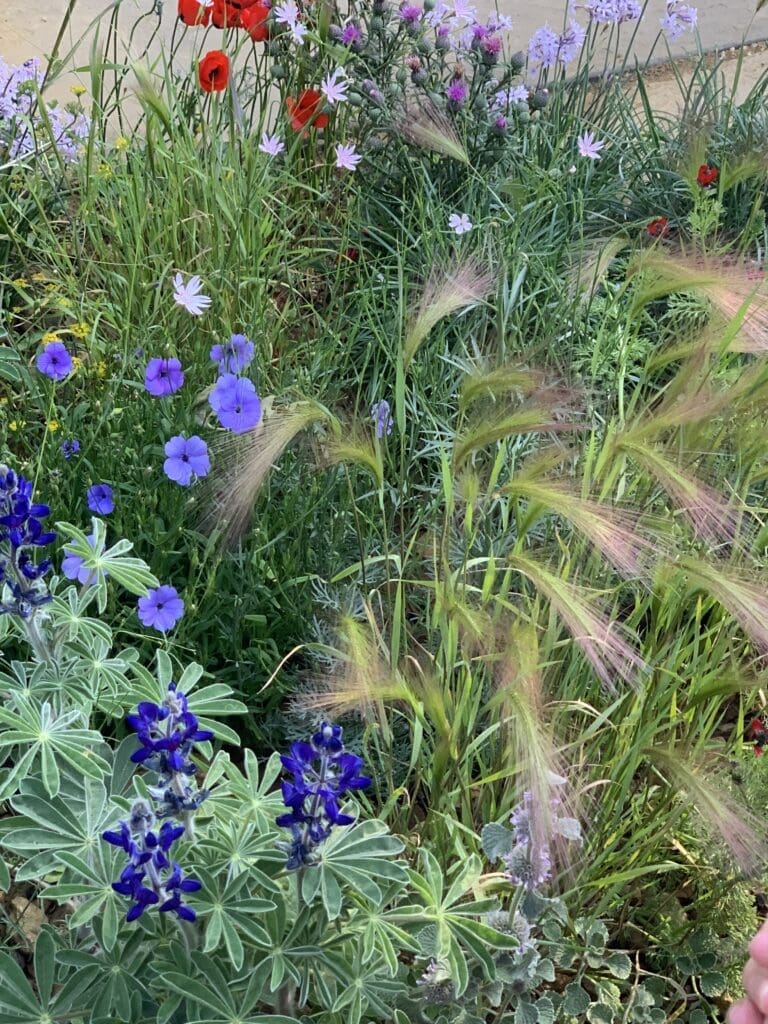
Monty Don used some stunning native trees in his garden, including maples, hornbeams, and dogwood. He also created what was described as a “shaggy lawn” full of daisies, dandelions, and clover.
Favorite People
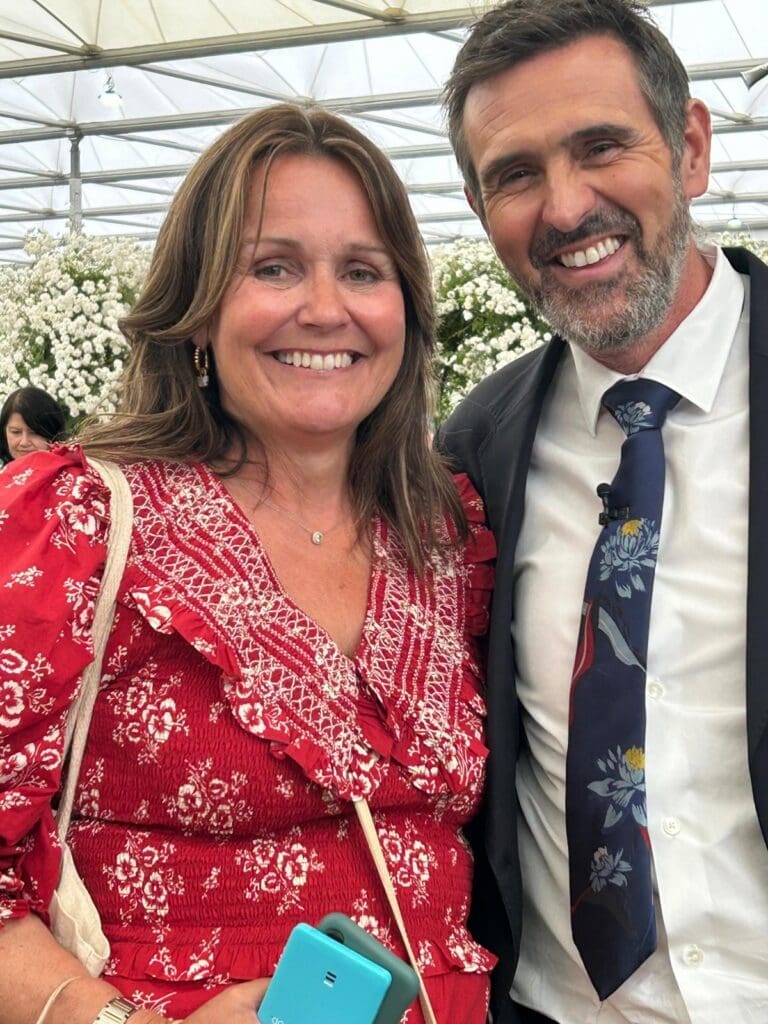
The show is televised all over the World, and the growers, landscapers, presenters and retailers spend time talking to the public, answering questions, sharing advice and gathering feedback. Once you are on the grounds, the enthusiasm and energy are infectious. I was lucky enough this year to connect and talk to several growers. Meeting Laura Stoddart, an illustrator, was a treat for my friend Katy. Laura creates beautiful homeware and stationery using her nostalgic and whimsical botanical illustration. She told us her next challenge is to capture the new King’s Rose in watercolour. As many of you know, I am a huge Gardener’s World fan and bumped into Adam Frost in the pavilion. Despite being approached by many fans during the week, he had time for a lovely chat about our pets, both having a cat and dog combo at home, and I shared what a fan my husband is, having been made to watch Gardeners’ World during lockdown.
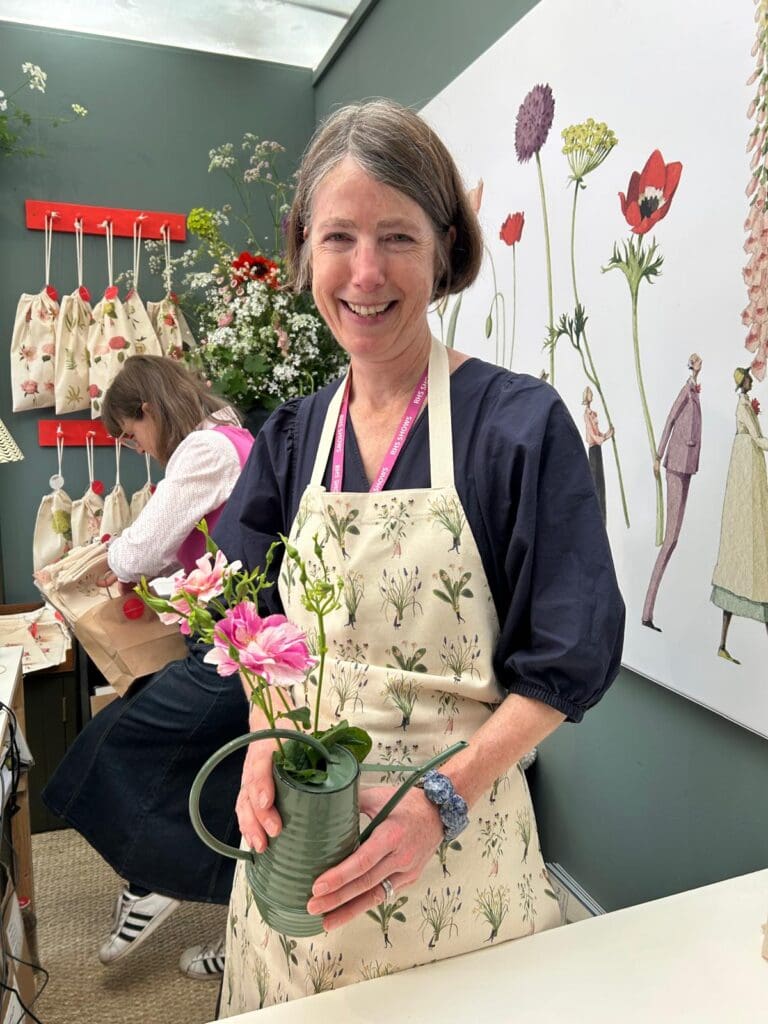
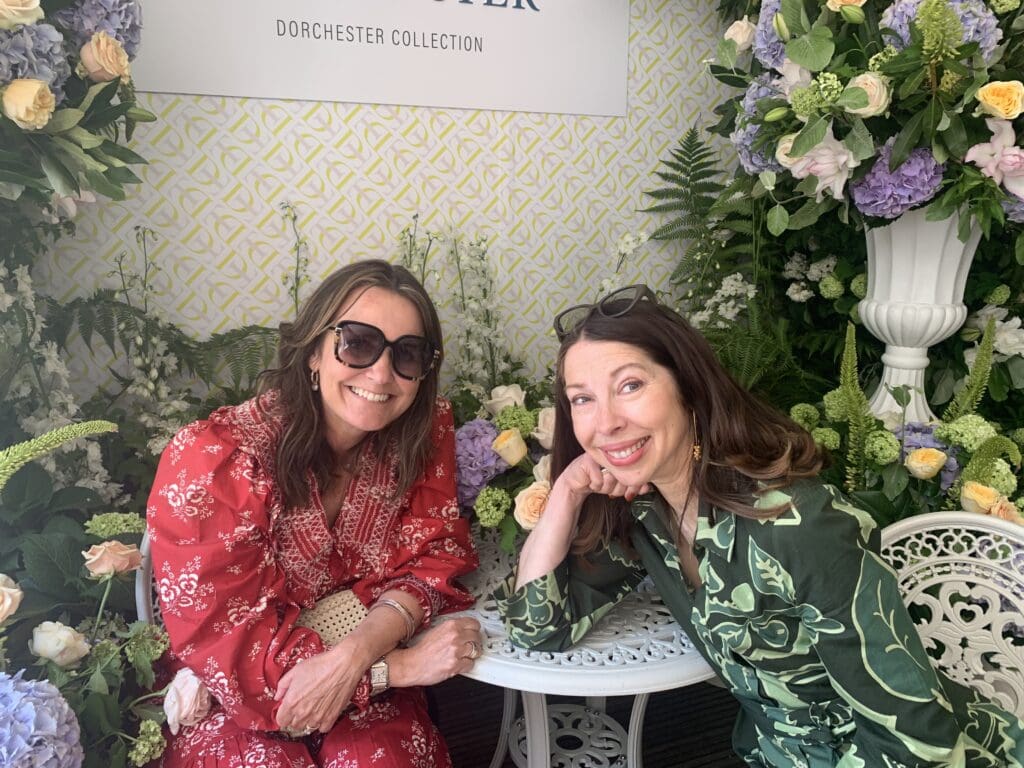
Best of all, I was able to enjoy the show with my lovely friend Katy, a fellow garden enthusiast. She also had to double up as a first aider when I tripped outside the hospitality tent (before I had my glass of champers). We had a fab day together debating the best garden and how to keep lupins alive for multiple years, and talking to a myriad of people during much-needed tea/coffee/cake breaks.
So, what did I take away from the show that we can use in our gardens?
- Plant ideas. The list of plants above is accessible and readily available for purchase. Visit the RHS Plant Ideas website to learn more about the planting conditions in which they work well.
- The show gardens are works of art, but this year, they really drew on nature, combining native wildflowers with more exotic cultivars in a very natural way. Use that style to enhance your garden and add more planting to create the feeling of layers and abundance with less structured plants.
- Roses are back! They formed an integral part of several show gardens, and with so many new long-flowering varieties, you can find a rose that suits your garden. I was in our garden in Suffolk the days before the show, and the roses were doing so well there. Knowing they like the conditions in Suffolk, I will add a couple more to add repetition.
- Color is key. While the gardens are naturalistic in style, color was used thoughtfully, either to create contrast or tones of the same color to soften the palette. Whatever way you decide to go, it’s important to think about how you use color in design. Monty’s Garden for Dogs was full of greenery, but his use of deep purples and orange to break up the space worked well and complemented his summerhouse’s muted orange and terracotta shades.
- Take a risk . I revisited several plants that I had either tried before without success or were unfamiliar to me. In particular, The Glasshouse used Fagus sylvatica to create structure and focal points instead of the traditional Boxwood or Yew balls/accent. Its dark color and interesting foliage worked really well with the naturalistic style of planting.
- Visit gardens often for ideas and inspiration, and if you are lucky enough to be in the UK next May, visit the show. It’s a definite bucket list item. What is also wonderful about Chelsea is that the gardens are moved to a new permanent home after the show so that others can appreciate their beauty, work, and effort, and the gardens’ life continues.
If you have stories about your garden or want to share your experiences of the Chelsea Flower Show, please send them to info@yourgardenstory.com. We would love to hear from you.
Your Garden Story. Here to help us all become gardeners and make the World greener.